
Mendive. Journal on Education, October-December 2025; 23(4), e4326
Translated from the original in Spanish
Original article
Impact of physical exercise on the cardiovascular and respiratory systems: a systematic review in the educational context
Impacto del ejercicio físico en los sistemas cardiovascular y respiratorio: revisión sistemática en el contexto educativo
Impacto do exercício físico nos sistemas cardiovascular e respiratório: revisão sistemática no contexto educacional
Juan Diego Dávila Cisneros1  0000-0003-2700-8830
  jdavilaci@unprg.edu.pe
Alfredo Puican Carreño1 0000-0002-1262-1985 apuican@unprg.edu.pe
Evelin Margot Merino Carranza2 0000-0002-8713-4049 emerinoc@upao.edu.pe
María del Pilar Fernández Celis1 0000-0002-0248-5852 mfernandezc@unprg.edu.pe
Raquel Yovana Tello Flores1 0000-0001-8060-2017 rtellof@unprg.edu.pe
1 National University Pedro Ruiz Gallo. Perú.
2 Private University Antenor Orrego. Perú.
Received: 22/06/2025
Accepted: 14/10/2025
ABSTRACT
The positive impact of physical exercise on the prevention of cardiopulmonary diseases
and overall well-being is widely documented in the literature. However, its integration into
educational contexts is a topic that has received little attention. Therefore, the objective of this article was
to analyze the impact of physical exercise on the cardiovascular and respiratory systems from
a pedagogical perspective. To this end, a systematic review was conducted in the Scopus
database, following the Preferred Reporting Items for Systematic Review (PRISMA) guidelines. Studies
were selected using the Population, Intervention, Comparison, and Outcomes (PICO) criteria
and analyzed with bibliometric and thematic tools. The results showed how physical exercise
improves cardiorespiratory function, especially in clinical populations. Technopedagogical, biomedical,
and contextual trends were identified. In all of these, a disconnect between biomedical and
pedagogical disciplines was evident. In this way, physical exercise was a valuable tool for teaching
physiological processes and its impact on reducing cardiopulmonary symptoms was remarkable.
Keywords: physical exercise; health education; biomedical metrics; pedagogy; systematic review.
RESUMEN
El impacto positivo del ejercicio físico en la prevención de enfermedades cardiopulmonares
y bienestar general es ampliamente documentado en la literatura. Sin embargo, su integración
en contextos educativos es un tema poco abordado. Es por ello que, el objetivo de este artículo
fue analizar el impacto que tiene el ejercicio físico en los sistemas cardiovascular y
respiratorio, desde una perspectiva pedagógica. Para ello, se realizó una revisión sistemática en la base
de datos de Scopus, de acuerdo a la normativa Preferred Reporting Items for Systematic
Review (PRISMA). Se seleccionaron estudios mediante criterios Population, Intervention,
Comparison and Outcomes (PICO) y se analizaron con herramientas bibliométricas y temáticas. Como
resultado, se evidenció cómo el ejercicio físico mejora la función cardiorrespiratoria, especialmente
en poblaciones clínicas. Se identificaron tendencias tecnopedagógicas, biomédicas y
contextuales. En todas ellas, se evidenció una desintegración hasta el momento entre las disciplinas
biomédicas y pedagógicas. De esta forma, el ejercicio físico fue una herramienta valiosa para enseñar
procesos fisiológicos y su impacto en la reducción de síntomas cardiopulmonares, a su vez, fue notable.
Palabras clave: ejercicio físico; educación en salud; métricas biomédicas; pedagogía;
revisión sistemática.
RESUMO
O impacto positivo do exercício físico na prevenção de doenças cardiopulmonares e na
promoção do bem-estar geral é amplamente documentado na literatura científica. No entanto, sua
integração em contextos educacionais permanece pouco explorada. Este estudo teve como objetivo
analisar os efeitos do exercício físico sobre os sistemas cardiovascular e respiratório sob uma
perspectiva pedagógica. Foi realizada uma revisão sistemática na base de dados Scopus (20202024),
seguindo as diretrizes do Preferred Reporting Items for Systematic Reviews and Meta-Analyses
(PRISMA). Quinze estudos foram selecionados com base nos critérios Population, Intervention,
Comparison and Outcomes (PICO) e analisados por meio de ferramentas bibliométricas e temáticas.
Os resultados evidenciaram que o exercício físico melhora significativamente a
função cardiorrespiratória, especialmente em populações clínicas. Foram identificadas tendências
tecno-pedagógicas, biomédicas e contextuais. Em todas as dimensões, observou-se uma
desarticulação persistente entre as disciplinas biomédicas e pedagógicas. Dessa forma, o exercício físico
revelou-se uma ferramenta pedagógica valiosa para o ensino de processos fisiológicos, com
impacto notável na redução de sintomas cardiopulmonares.
Palavras-chave: exercício físico; educação em saúde; métricas biomédicas; pedagogia;
revisão sistemática.
INTRODUCTION
Physical exercise contributes to the prevention of chronic diseases and to overall well-being,
with solid evidence in the medical literature (Ciolac et al., 2020; Samuel et al., 2020). According
to Rhodes et al. (2020), its application in educational settings for teaching the cardiovascular
and respiratory systems has received less attention, despite its didactic potential.
Therefore, physical activity allows for the direct observation of physiological responses, such
as changes in heart rate or ventilation, which facilitates the link between theory and practice
(Bouvière et al., 2021). This approach aligns with pedagogical models that prioritize sensory experience
for knowledge retention (Quinn et al., 2021; Moyers & Hagger, 2023).
Scientific evidence confirms that physical activity improves both cardiovascular health and
certain cognitive functions related to learning (Athanasiou et al., 2022; Ibeas et al., 2021). However, most existing reviews focus on medical
or sports applications, without exploring its integration into
educational contexts (Aygün & Çakýr-Atabek, 2021). This omission hinders the development of practical methodologies that
link physiological benefits with school dynamics.
According to Kania et al. (2024), Lee (2023) Bracho-Fuenmayor According to et al. (2024), the integration of biomedical technologies into educational settings is progressing slowly.
Devices such as portable spirometers or cardiac monitors, common in laboratories, are rarely
incorporated into classrooms or teacher training (Harris &
Kazdaðlý, 2024). The COVID-19 pandemic
exposed deficiencies in practical health education, even in established educational systems
(Avendaño-Porras). et al., 2022; Díaz-Téllez et al., 2022; Pacheco-Velazquez et
al., 2023). This lag is concerning given the increase in sedentary behavior among children and its association with respiratory
and metabolic disorders (Barabás & Germán-Salló, 2022; Love et al., 2022; Webster, 2020). This study analyzes the integration of physiological data from exercise into educational
strategies. Existing literature prioritizes health indicators but omits their pedagogical application.
Therefore, this article aims to analyze the impact of physical exercise on the cardiovascular and
respiratory systems from a pedagogical perspective.
MATERIALS AND METHODS
A quantitative research paradigm was adopted, with a systematic review design, in
accordance with the Preferred Reporting Items for Systematic Review (PRISMA) guidelines. Under this
approach, the aim was to analyze the impact of physical exercise on cardiovascular and respiratory
systems from a pedagogical perspective.
Selection of studies
Inclusion and exclusion criteria
The criteria for fit and relevance to the research were framed within the PICO guidelines. This
was selected due to its educational research approach and the possibility of quantitative synthesis
of the results (Table 1).
Table 1. Inclusion and exclusion criteria according to PICO
PICO criteria |
Determinants |
Population |
Studies addressing the topic in populations of students, teachers, or curricular programs were selected |
Intervention |
Research that designs or implements pedagogical strategies based on physical exercise |
Comparison |
Studies that synthesize the advantages of traditional and innovative methods in teaching physical exercise |
Outcomes |
Research presenting results related to improvements in learning, adherence, or physiological awareness |
Source: Own elaboration
The literature search was conducted in the SCOPUS database. This platform was selected for
two reasons documented in the literature: its broad academic coverage and its focus on
peer-reviewed studies, which ensures rigor and quality. The following search formula was used:
[TITLE-ABS-KEY (physical AND exercise) AND TITLE-ABS-KEY (cardiovascular AND system) AND
TITLE-ABS-KEY (respiratory AND system) AND TITLE-ABS-KEY (health AND education)].
The texts were filtered within a time range spanning 2020 to 2024 to ensure that the data
studied were recent and relevant. Furthermore, priority was given to texts published in English and
with the structure of an original article.
Selection procedure
The research selection process was carried out according to the flowchart recommended by
the PRISMA guidelines, as shown in Figure 1. This selection was made using pre-established
inclusion and exclusion criteria. A comprehensive search was performed in the selected database
(Scopus). In this initial search, 224 studies were identified, and 21 studies were excluded based on
the previously established inclusion and exclusion criteria for bibliometric analysis. Finally, 203
studies were selected for bibliometric analysis after reviewing the titles and abstracts of the other
203 studies. Subsequently, based on the analysis of the most cited publications, 20 studies
were selected for analysis in the map of relevant publications. At the end of this phase, after
removing five studies due to their theoretical relevance, 15 studies were returned to the map of
relevant research (Figure 1).
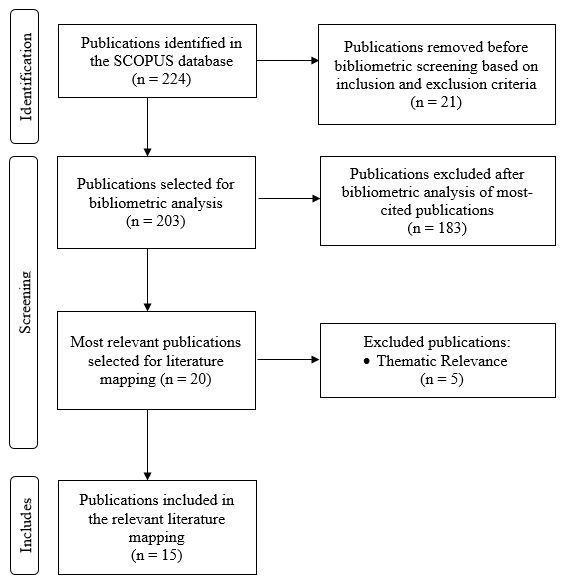
Figure 1. Flowchart for study selection
Source: Authors' elaboration based on the recommendations of Page et al. (2021)
Data extraction and analysis
The bibliometric analysis of the studies was conducted using the Bibliometrix and
VOSviewer tools. Both proved to be essential for carrying out quantitative analyses of scientific literature,
as highlighted by Moral-Muños et al. (2020). Data on institutions, countries, and collaborative
networks were collected from a health education and educational policy perspective. Finally, for the
thematic analysis of the research, an extraction matrix with three dimensions of analysis was designed.
RESULTS
Bibliometric analysis
Temporal frequency of publications
The data showed a fluctuating trend in annual documentary production on the study topic,
as shown below in Figure 2. The year 2021 recorded the highest number of publications
(47 documents), with a significant peak that exceeded the base year 2020 (33 documents) by
42% (Figure 2).
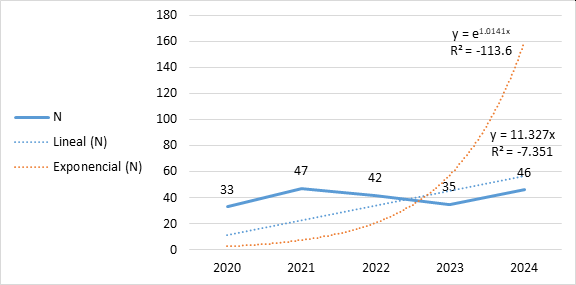
Figure 2. Temporal distribution of publications
Source: Own elaboration
However, this growth was not sustained in subsequent years, as a progressive decline was
observed in 2022 (42 documents, -11%) and 2023 (35 documents, -17% compared to 2022). These
data, viewed from a temporal and analytical/evolutionary perspective, suggested a possible
temporary saturation in this area of study. In 2024, however, a notable recovery (46 documents) in
academic interest in this particular topic was observed.
The analysis of trend models showed that the exponential equation (y = e1.0141x) and the
linear equation (y = 11.327x) were statistically invalid, with negative R² values (-113.6 and
-7.351, respectively). These data supported the argument that publications did not follow a
uniform growth pattern, suggesting they may be responding to more complex dynamics that
influence scientific output.
Collaboration networks by country
Figure 3 presents the collaboration networks among the leading countries in scientific
production on the topic. For further understanding, the ten most productive countries are presented
in Figure 4, to facilitate their analysis (Figure 3).
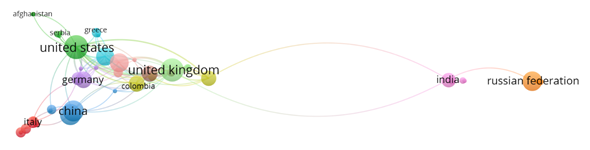
Figure 3. Mapping of collaborations between countries
Source: Authors' elaboration based on VOSviewer data
The presence of consolidated networks was observed in English-speaking countries, with
the United States leading in scientific production, with 25 documents and a collaboration intensity
of 35. The United Kingdom came in second, with 23 documents and a collaboration intensity of
32. (Figure 4)
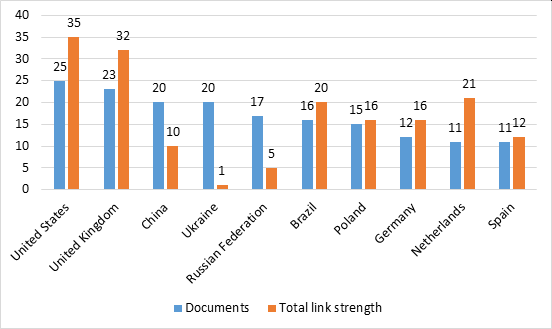
Figure 4. Distribution of documents and intensity of collaborations by country
Source: Own elaboration
Based on these data, three main collaboration clusters were identified (Figure 5). These
were organized around collaborations between countries and also the themes that these
geographical groups addressed in relation to the object of our research.
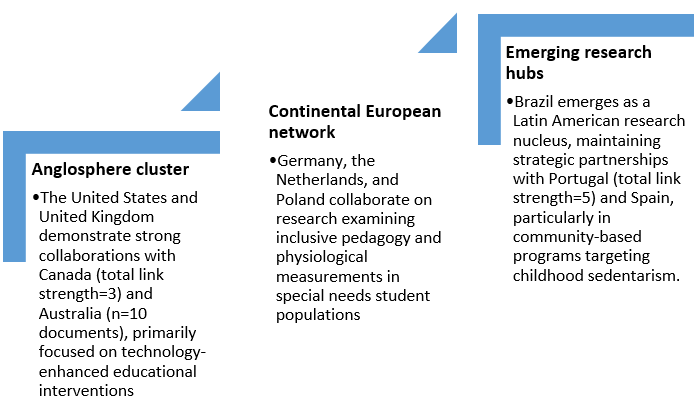
Figure 5. Main collaboration clusters
Source: Own elaboration
The cases of China and Ukraine revealed an interesting pattern; these nations, with 20
documents each, showed a low index (10) of collaborative intensity, or rather, focused on local
research without global integration. On the other hand, the Netherlands had only 11 documents
yet demonstrated a higher collaborative intensity (21) than leading countries like Brazil or Germany.
Citation patterns
Of the total documents analyzed, only 154 accumulated citations (see Figure 6). Based on
this data, 2113 citations were observed, with an h-index of 19. In 2020, 41 citations were
recorded, a figure that tripled in 2021 (133 citations) and increased sixfold in 2022 (257 citations).
This upward trend intensified significantly in 2023 (493 citations) and reached its peak in 2024
(797 citations).
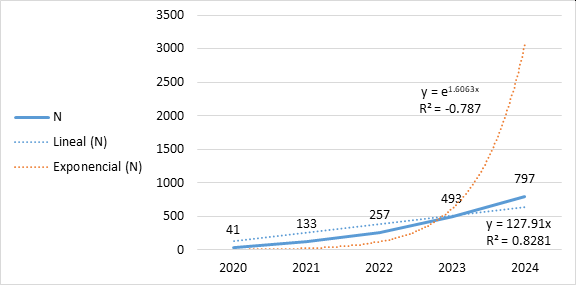
Figure 6. Annual distribution of citation patterns
Source: Own elaboration
Additionally, the linear equation (y = 127.91x) showed a high degree of fit (R² =
0.8281), indicating that growth follows an approximately linear trend with an average increase
of approximately 128 citations per year. This model adequately explained 82.81% of the
observed variability. On the other hand, the exponential equation (y = e1.6063x) showed a poor fit (R² = -0.787), implying that this model was not suitable for describing the trend, despite the
apparent exponential growth of the raw data. This indicated that the behavior of citations over the
years was better suited to a linear growth pattern than an exponential one.
Co-occurrence of keywords and trends in literature
The keyword co-occurrence analysis identified three thematic areas specifically linked to
physiology and medicine. These areas: exercise (111 occurrences), physical activity (95), and cardiorespiratory fitness (31), had a combined link strength exceeding 2,500. Furthermore, the centrality of
these three thematic areas was related to the quantification of organic effects associated with
these variables, as evidenced by the categories of blood pressure (27) and oxygen consumption (45).
On the other hand, although this research was focused on the educational applications of
physical exercise, it was observed that education (4), health education (3) and physical education (9) presented marginal occurrences, with link strengths lower than 100. This indicated, in the
authors' inference, that the physiological data of physical education were poorly contextualized in
the pedagogical curricula.
Factor analysis corroborated the data on the co-occurrence of keywords, primarily in clinical
and adult populations (see Figure 7), thus confirming the scarcity of research in educational
contexts identified in the previous analysis. The terms described in this analysis grouped into a
single cluster. However, the distribution across the factor dimensions allowed for the identification
of two dimensions within the conceptual network (Figure 7).

Figure 7. Keyword co-occurrence network
Source: Authors' elaboration based on VOSviewer data
Included studies
To analyze the effect of physical exercise on the cardiovascular and respiratory systems from
a pedagogical perspective, a filtering process was carried out to identify the 15 most cited
documents in the literature, which were then evaluated by experts for inclusion in this research. Based
on these data, an analysis of the results of each study was performed, using the thematic
analysis matrix presented in table 2.
Table 2. Classification of the most cited documents according to PICO criteria
Code |
Population |
Intervention |
Comparison |
Results |
E1 |
502,490 adults from the UK Biobank |
Consumption of different types and quantities of alcohol |
Comparison between safe and unsafe doses |
U-shaped relationship with mortality and CVD; inverse association with CKD |
E2 |
60 pregnant women in the first/second trimester |
Exercise combined with cognitive-behavioral therapy |
Standard prenatal education |
Anxiety reduction, improvement in physical and psychological quality of life |
E3 |
35 women aged 21-35 |
Barre-fitness training |
Fitness dance classes |
Improvement in morphofunctional parameters (except hip circumference and blood pressure) |
E4 |
419 patients with COPD |
8-week home pulmonary rehabilitation program |
Presence/absence of comorbidities |
Improvement in exercise capacity and quality of life sustained for one year |
E5 |
Patients with multiple chronic diseases |
Personalized 6-month MultiPill-Exercise Program |
Not applicable (pilot without control group) |
Increased weekly exercise time, improved VO2 max and leg strength |
E6 |
22 female university students (19-21 years old) |
Aerobic exercise program |
Traditional physical education program |
Improvement in cardiorespiratory function measured with specific tests |
E7 |
Patients with non-communicable diseases |
Social media-based interventions |
Not applicable (systematic review) |
Significant improvements in exercise behavior in four out of five RCTs |
E8 |
University students |
Literature review on physical exercise |
Not applicable (narrative review) |
Proposals to improve exercise promotion policies |
E9 |
200 patients with congenital heart disease (13-25 years old) |
Transition education program |
Group without intervention |
Protocol for evaluating health-related quality of life |
E10 |
190 patients with post-pulmonary embolism syndrome |
Eight-week pulmonary rehabilitation program |
Standard medical care |
Protocol to assess physical capacity, dyspnea and quality of life |
E11 |
91 patients with COPD |
24-week Tai Chi program |
Group hike and standard service |
Greater improvement in the walking test and quality of life parameters |
E12 |
Young adults from the Moscow region |
Regular physical activity |
Not applicable (observational study) |
Increased lung capacity and fitness levels |
E13 |
87 male university students |
Physical education based on football |
Traditional methods of physical education |
Improvement in somatic health and emotional state in the experimental group |
E14 |
Students with special medical needs |
Methodological framework for heterogeneous physical education classes |
Not applicable (methodological study) |
Proposed structure for inclusive physical education |
E15 |
34 female university students (17-19 years old) |
Adapted method of physical education |
Comparison between subgroups |
Significant improvements in endurance, coordination, and cardiovascular function |
Source: Own elaboration
Technopedagogical trends
Up to this point, it was observed that a high frequency of the selected texts alluded to
integrating technological advantages into pedagogical methodologies to enhance the benefits of
physical exercise (see Table 2); this was the case with E2. These authors demonstrated that
combining physical exercise with cognitive behavioral therapy (CBT), especially during pregnancy,
significantly reduced anxiety and improved quality of life. They also highlighted the importance of
psychological strategies in physical activity programs.
E7, for its part, emphasized that interventions carried out through social media were effective
in promoting exercise among patients with non-communicable diseases. However, they
acknowledged the limited impact of these interventions on dietary adherence. This, in the opinion of the
authors of this study, indicated that digital environments as pedagogical tools for promoting
healthy habits warranted more comprehensive approaches.
In parallel, E9 and E10 emphasized the importance of transitional education programs
and pulmonary rehabilitation (respectively). For these two groups of authors, therapeutic
education offered advantages by improving autonomy and clinical outcomes, especially in populations
with congenital heart disease or post-pulmonary embolism syndrome (Table 3).
Table 3. Techno-pedagogical trends identified
Techno-pedagogical trends |
Improvement strategies |
Hybrid interventions: psychopedagogy and movement |
E2: Psychological strategies amplified the physiological effects of exercise by addressing emotional barriers (e.g., fear of movement in pregnant women). E4: CBT-based pedagogy could be adapted to other populations to improve adherence and self-efficacy. |
Digital environments as pedagogical spaces |
E7: Social media platforms function as virtual classrooms for health education, but they require a multidimensional design. E7: The digital divide and information overload demanded more structured digital curricula, potentially incorporating artificial intelligence (AI) for content personalization. |
Transitional and self-management education programs |
E9-10: Mobile applications for monitoring physiological parameters (e.g., heart rate), linked to educational workshops on respiratory/cardiovascular anatomy. E9-10: Virtual simulators that teach patients to recognize warning signs during exercise, reinforcing their autonomy. |
Limitations and opportunities |
E7: The technological gap may exclude older adults or low-income populations. E11: Overly individualistic approach; collaborative models need to be explored (e.g., group virtual classrooms for rehabilitation, as suggested by the Tai Chi program in E11). |
Source: Own elaboration
DISCUSSION
The results of this systematic review are consistent with previous evidence, such
as The study by Grainger et al. (2020) associated physical exercise with improvements in cardiorespiratory
fitness. However, most of the studies analyzed are limited to clinical or sports contexts, without
addressing their integration into educational systems (Conaghan et al., 2020; Morgan et al., 2021). A
relevant factor is the predominance of physiological variables (VO, max, blood pressure), to the
detriment of methodologies that allow these findings to be applied in classrooms (Sánchez et al., 2020).
Jankowski et al. (2021) demonstrate that technologies such as mobile spirometry and
cardiac monitors have improved the measurement of biomedical parameters in experimental
studies. However, bibliometric data reveal that these tools are not systematically incorporated into
teacher training or school curricula (Galea et
al., 2020; Huang et al., 2020). This disconnect reflects a
gap between technological development and educational demands, likely due to limited
collaboration between the biomedical and educational fields.
Current literature on exercise interventions in adolescents prioritizes clinical metrics, such
as those reported by Yuen et al. (2021), but omits educational assessments. Rosales et al. (2024) addressed cognitive dimensions; however, none of the reviewed studies integrate tools to
measure the transfer of results to educational settings. This gap hinders the development of programs
that articulate physiological principles with concrete pedagogical applications.
The literature has extensively documented the benefits of exercise in education. However, in
the authors' opinion, gaps remain in its practical application, particularly in the integration of
biomedical technologies into school settings and in measuring their cognitive impact. An approach
that combines physiological and pedagogical perspectives could optimize its use as a teaching resource.
Additionally, the results of this systematic review demonstrate that physical exercise can be
used as an educational tool for teaching physiological processes. Recent studies show that
physical activity, beyond its therapeutic benefits, facilitates the understanding of systems such as
the cardiovascular and respiratory systems through direct experience (Belanger et al., 2021; Jung et al., 2022). This approach requires adapting physiological data to pedagogical contexts,
prioritizing practical interaction over abstract theory (Jean-Gilles et al., 2024; Moreira et al., 2020). Furthermore, approaches such as situated learning reinforce the idea that bodily
movement contributes to the assimilation of complex knowledge (Hahad et al., 2021).
Hybrid interventions, such as the integration of physical exercise and cognitive-behavioral
therapy, along with digital tools, have shown effectiveness in educational settings (García-Martínez et al., 2021; Samuel et al., 2020). Their implementation depends on contextual adaptations, as
studies rule out universal models (Seiser & Portfelt, 2022). Tai Chi improves functional capacity in
patients with COPD, but in school settings, it requires methodological adjustments that are appropriate
to the psycho-developmental stage of the children (Gilliam et al., 2021; Yang et al., 2023).
The findings of this study highlight the need to integrate physical exercise into education
systems. The data show that its impact depends on collaboration among schools, researchers,
and policymakers (Alazmi & Alazmi, 2022; Sinnema et al., 2020). A key step is adapting
teacher training to include principles of physiology, along with practical teaching materials
(Pacheco-Velazquez et al., 2023). Furthermore, it is essential to consider the socioeconomic barriers
that limit access to these practices (Quinn et al., 2021; Moyers & Hagger, 2023). This approach
could significantly improve health and learning outcomes.
This systematic review confirms that physical exercise improves cardiovascular and
respiratory function. Despite this, the analyzed literature includes few references to pedagogical or
educational strategies. Technology-based interventions, such as digital platforms, increase
treatment adherence, but their use in educational settings is still infrequent. However, our research is
not without limitations. This study is restricted to English-language research published between
2020 and 2024, which excludes previous contributions or those in other languages. The low
representation of pedagogical studies in the sample reduces the applicability of the results to
heterogeneous educational settings. It is recommended to incorporate non-English-language databases and
employ mixed-methods approaches that complement bibliometric analysis with qualitative evidence
to address the current limitations in integrating exercise into health education.
REFERENCES
Alazmi, A., & Alazmi, H. (2022). Closing the gap between research and policy-making to
better enable effective educational practice: a proposed framework. Educational Research for Policy and
Practice, 22, 91-116. https://doi.org/10.1007/s10671-022-09321-4
Athanasiou, N., Bogdanis, G., & Mastorakos, G. (2022). Endocrine responses of the stress
system to different types of exercise. Reviews in Endocrine & Metabolic
Disorders, 24, 251-266. https://doi.org/10.1007/s11154-022-09758-1
Avendaño-Porras, V. D., Alfonzo-Albores, I., de la Puente, M., Díaz-Téllez, Á. S.,
Tamez-Martínez, X., & Bajaña-Miranda, S. R. (2022). Digitilization in Latin American higher education
under Covid-19. Journal of Positive Psychology and
Wellbeing, 6(1), 32893298. https://journalppw.com/index.php/jppw/article/view/5255
Aygün, C., & Çakýr-Atabek, H. (2021). Alternative Model for Physical Activity: Active Video Games Lead to
High Physiological Responses. Research Quarterly for Exercise and
Sport, 93, 447-456. https://doi.org/10.1080/02701367.2020.1864258
Barabás, Z., & Germán-Salló, Z. (2022). Educational trends in biomedical signal processing. Acta Marisiensis. Seria Technologica, 19, 41-45. https://doi.org/10.2478/amset-2022-0016
Belanger, M., Rao, P., & Robbins, J. (2021). Exercise, Physical Activity, and Cardiometabolic
Health. Cardiology in Review, 30, 134-144. https://doi.org/10.1097/CRD.0000000000000417
Bracho-Fuenmayor, P. L., Huicab-García, Y., Lucero-Baldevenites, E. V., Mejía-Ríos, J., &
Díaz-Téllez, Á. S. (2024). Gamification and digital equity: Analysis of educational designs in
the metaverse for vulnerable populations. Metaverse Basic and Applied
Research, 3, 105. https://doi.org/10.56294/mr2024.105
Bouvière, J., Fortunato, R., Dupuy, C., Werneck-De-Castro, J., Carvalho, D., & Louzada, R.
(2021). Exercise-Stimulated ROS Sensitive Signaling Pathways in Skeletal Muscle. Antioxidants, 10. https://doi.org/10.3390/antiox10040537
Ciolac, E., Da Silva, J., & Vieira, R. (2020). Physical Exercise as an Immunomodulator of
Chronic Diseases in Aging. Journal of physical activity &
health, 1-11. https://doi.org/10.1123/jpah.2019-0237
Conaghan, C., Daly, E., Pearce, A., King, D., & Ryan, L. (2020). A systematic review of the
effects of educational interventions on knowledge and attitudes towards concussion for
people involved in sport Optimising concussion education based on current literature. Journal of Sports Sciences, 39, 552-567. https://doi.org/10.1080/02640414.2020.1835223
Díaz-Téllez, Á. S., Mejía-Ríos, J., & Aristizábal-Murillo, I. D. (2022). Aproximación a la
intersección entre comunicación y psicología desde los términos concepto y mediación. Investigación & Desarrollo, 29(2), 260291. https://doi.org/10.14482/INDES.29.2.150
Galea, J., Ramos, K., Coit, J., Friedman, L., Contreras, C., Dueñas, M., Hernández, N., Muster,
C., Lecca, L., & Gelaye, B. (2020). The Use of Wearable Technology to Objectively
Measure Sleep Quality and Physical Activity Among Pregnant Women in Urban Lima, Peru: A
Pilot Feasibility Study. Maternal and Child Health
Journal, 24, 823-828. https://doi.org/10.1007/s10995-020-02931-5
García-Martínez, I., Montenegro-Rueda, M., Molina-Fernández, E., & Fernández-Batanero, J.
(2021). Mapping teacher collaboration for school success. School Effectiveness and School Improvement, 32, 631-649. https://doi.org/10.1080/09243453.2021.1925700
Gilliam, E., Kilgore, K., Liu, Y., Bernier, L., Criscitiello, S., Litrownik, D., Wayne, P., Moy, M., &
Yeh, G. (2021). Managing the experience of breathlessness with Tai Chi: A qualitative
analysis from a randomized controlled trial in COPD. Respiratory medicine, 184, 106463. https://doi.org/10.1016/j.rmed.2021.106463
Grainger, R., Liu, Q., & Geertshuis, S. (2020). Learning technologies: A medium for
the transformation of medical education? Medical
Education, 55, 23-29. https://doi.org/10.1111/medu.14261
Hahad, O., Kuntiæ, M., Frenis, K., Chowdhury, S.,
Lelieveld, J., Lieb, K., Daiber, A., & Münzel, T.
(2021). Physical Activity in Polluted AirNet Benefit or Harm to Cardiovascular Health?
A Comprehensive Review. Antioxidants, 10. https://doi.org/10.3390/antiox10111787
Harris, R., & Kazdaðlý, H. (2024). Using
TECHnology to predict the future of biomedical education. FEBS Open Bio, 15, 48-55. https://doi.org/10.1002/2211-5463.13953
Huang, C., Izmailova, E., Jackson, N., Ellis, R., Bhatia, G., Ruddy, M., & Singh, D. (2020).
Remote FEV1 Monitoring in Asthma Patients: A Pilot Study. Clinical and Translational Science, 14, 529-535. https://doi.org/10.1111/cts.12901
Ibeas, K., Herrero, L., Mera, P., & Serra, D. (2021). Hypothalamus-skeletal muscle crosstalk
during exercise and its role in metabolism modulation. Biochemical pharmacology, 114640. https://doi.org/10.1016/j.bcp.2021.114640
Jankowski, P., Górska, K., Mycroft, K., Korczyñski, P., Soliñski, M., Ko³towski, £., & Krenke, R. (2021).
The use of a mobile spirometry with a feedback quality assessment in primary care setting-A
nationwide cross-sectional feasibility study. Respiratory
medicine, 184, 106472. https://doi.org/10.1016/j.rmed.2021.106472
Jean-Gilles, M., Gabus, V., Desgraz, B., Dayer, N., Daucourt, C., Muller, O., & Baggish, A.
(2024). Basics of exercise physiology: from Fick principle to the athlete's heart. Revue medicale suisse, 20 875, 1040-1043. https://doi.org/10.53738/REVMED.2024.20.875.1040
Jung, M., Yi, S., An, S., Youn, K., Yi, J., Han, S., Ihm, S., Jung, H., Youn, H., & Ryu, K.
(2022). Association of Physical Activity and Lower Respiratory Tract Infection Outcomes in
Patients With Cardiovascular Disease. Journal of the American Heart Association:
Cardiovascular and Cerebrovascular Disease, 11. https://doi.org/10.1161/JAHA.121.023775
Kania, D., Romaniszyn-Kania, P., Bugdol, M., Tuszy, A., Ledwoñ, D., Pollak, A., & Mitas, A. (2024). Flow and
Physiological Response Assessment during Exercise Using Metrorhythmic Stimuli. Journal of Human Kinetics, 94, 243- 54. https://doi.org/10.5114/jhk/187804
Lee, H. (2023). The rise of ChatGPT: Exploring its potential in medical education.
Anatomical Sciences Education, 17, 926-931. https://doi.org/10.1002/ase.2270
Love, T., Cysyk, J., Attaluri, A., Tunks, R., Harter, K., & Sipos, R. (2022). Examining Science
and Technology/Engineering Educators' Views of Teaching Biomedical Concepts Through
Physical Computing. Journal of Science Education and
Technology, 32, 96-110. https://doi.org/10.1007/s10956-022-09996-7
Moreira, J., Wohlwend, M., & Wisløff, U. (2020). Exercise and cardiac health: physiological
and molecular insights. Nature Metabolism, 2, 829-839.
https://doi.org/10.1038/s42255-020-0262-1
Morgan, H., Parker, A., & Marturano, N. (2021). Evoking hope in marginalised youth
populations through non-formal education: critical pedagogy in sports-based interventions. British Journal of Sociology of Education, 42, 307-322.
https://doi.org/10.1080/01425692.2021.1894547
Moyers, S., & Hagger, M. (2023). Physical activity and cortisol regulation: A meta-analysis. Biological Psychology, 179. https://doi.org/10.1016/j.biopsycho.2023.108548
Pacheco-Velazquez, E., Alonso, C., Lindin, C., & Rodes-Paragarino, V. (2023). Virtual
Education: Trends in Biomedical Engineering Education. 2023 World Engineering Education Forum-Global Engineering Deans Council
(WEEF-GEDC), 1-7. https://doi.org/10.1109/WEEF-GEDC59520.2023.10343983
Quinn, T., Kline, C., Nagle, E., Radonovich, L., Alansare, A., & Gibbs, B. (2021).
Cardiovascular responses to physical activity during work and leisure. Occupational and Environmental Medicine, 79, 94-101. https://doi.org/10.1136/oemed-2021-107551
Rhodes, S., Johnson, R., & Johnson, F. (2020). Board Relevance of an Osteopathic Medical
Physiology Course Introductory, Cardiovascular and Respiratory Sections. The FASEB Journal, 34. https://doi.org/10.1096/fasebj.2020.34.s1.09317
Rosales, M., Huacacolque, E., Sequera, J., & Wong, L. (2024). Framework for Monitoring
Peruvian Patients with Hypertension using a Smartwatch and GPT. 2024 35th Conference of Open Innovations Association
(FRUCT), 588-595. https://doi.org/10.23919/fruct61870.2024.10516393
Samuel, B., Adedamola, A., Oladayo, A., & Temitope, I. (2020). Role of exercise and
physical activity in prevention and management of chronic diseases. GSC Biological and Pharmaceutical Sciences, 12, 090-097. https://doi.org/10.30574/gscbps.2020.12.3.0277
Sánchez, J., López-Zapata, D., Pinzón, Ó., García, A., Morales, M., & Trujillo, S. (2020). Effect
of flipped classroom methodology on the student performance of gastrointestinal and
renal physiology entrants and repeaters. BMC Medical
Education, 20. https://doi.org/10.1186/s12909-020-02329-5
Seiser, A., & Portfelt, I. (2022). Critical aspects to consider when establishing collaboration
between school leaders and researchers: two cases from Sweden. Educational Action Research, 32, 260-275. https://doi.org/10.1080/09650792.2022.2110137
Sinnema, C., Daly, A., Liou, Y., & Rodway, J. (2020). Exploring the communities of learning
policy in New Zealand using social network analysis: A case study of leadership, expertise,
and networks. International Journal of Educational
Research, 99, 101492. https://doi.org/10.1016/j.ijer.2019.10.002
Webster, C. (2020). Artificial intelligence and the adoption of new technology in medical
education. Medical Education, 55. https://doi.org/10.1111/medu.14409
Yang, Y., Yang, L., Yang, X., & Tian, Y. (2023). Effects of Tai Chi on Lung Function,
Exercise Capacity and Psychosocial Outcomes in Patients With Chronic Obstructive
Pulmonary Disease: Systematic Review and Meta-analysis of Randomized Controlled Trials. Biological Research For Nursing, 25, 635-646. https://doi.org/10.1177/10998004231178318
Yuen, C., Puma, D., Millones, A., Galea, J., Tzelios, C., Calderón, R., Brooks, M., Jimenez,
J., Contreras, C., Nichols, T., Nicholson, T., Lecca, L., Becerra, M., & Keshavjee, S.
(2021). Identifying barriers and facilitators to implementation of community-based
tuberculosis active case finding with mobile X-ray units in Lima, Peru: a RE-AIM evaluation. BMJ Open, 11. https://doi.org/10.1136/bmjopen-2021-050314
Conflict of interest
Authors declare no conflict of interests.
Authors' contribution
The authors participated in the design and writing of the article, in the search and analysis of the information contained in the consulted bibliography.

This work is licensed under a Creative Commons Attribution-NonCommercial 4.0 International License