 0009-0002-3152-4352
  charlesp7408@gmail.com
Isbel Barrera Cabrera1
0000-0003-1004-7972 isbel.barrera@upr.edu.cuNivia Esther Alum Dopico1
0009-0009-5621-567X nivia@upr.edu.cu

Mendive. Journal on Education, October-December 2025; 23(4), e4288
Translated from the original in Spanish
Original article
The process of career guidance towards the specializations of the Ministry of the Interior in Basic Secondary Education
El proceso de orientación profesional hacia las especialidades del Ministerio del Interior en Secundaria Básica
O processo de orientação profissional para especializações do Ministério do Interior no Ensino Fundamental e Médio
Carlos Quintana Ramos1 0009-0002-3152-4352 charlesp7408@gmail.com
Isbel Barrera Cabrera1 0000-0003-1004-7972 isbel.barrera@upr.edu.cu
Nivia Esther Alum Dopico1 0009-0009-5621-567X nivia@upr.edu.cu
1 University of Pinar del Río "Hermanos Saíz Montes de Oca". Pinar del Río, Cuba.
Received: 29/05/2025
Accepted: 11/10/2025
ABSTRACT
Career guidance toward military careers and specializations within the Ministry of the Interior is a national priority, given the importance of maintaining internal order and state security as a guarantee for preserving the revolutionary process. Vocational training from an early age, provided by the Ministry of the Interior officers through interest groups, can ensure future succession in this state responsibility, guaranteeing the performance of new generations. Conscious career selection, based on motivations and interests, can only be achieved intentionally through the career guidance process. This research aimed to develop a pedagogical strategy to improve the career guidance process for Ministry of the Interior specializations studied in higher education institutions. The research process adopted the dialectical-materialist method as its general framework, underpinning the theoretical and empirical methods that enabled the study and systematization of the theoretical and methodological foundations of the research process. The practical result consisted of the pedagogical strategy designed from extracurricular activities, with the support of a classroom of the Ministry of the Interior located in the Basic Secondary School, where a system of workshops on the specialties is taught, which fostered professional orientation based on the acquisition of knowledge, development of skills, abilities, motives and professional interests towards military careers.
Keywords: pedagogical strategy; career guidance; specialties of the Ministry of the Interior.
RESUMEN
La orientación profesional hacia carreras y especialidades militares del Ministerio del Interior constituye una de las prioridades del país, por la importancia que tiene la preservación del orden interior y la seguridad del Estado, como garantía para preservar el proceso revolucionario. La formación vocacional desde edades tempranas del estudiante mediante la labor educativa que ejercen los oficiales del Ministerio del Interior a través de los círculos de interés, puede asegurar el relevo futuro en este encargo estatal, como garantía del desempeño de las nuevas generaciones. La selección profesional consciente, fundamentada en motivaciones e intereses solo puede lograrse si es intencionada a través del proceso de orientación profesional. La investigación tuvo como objetivo elaborar una estrategia pedagógica para perfeccionar el proceso de orientación profesional hacia especialidades del Ministerio del Interior que se estudian en institutos de la educación superior. En el proceso investigativo se asumió como método general el dialéctico-materialista, que sustentó los métodos teóricos y empíricos que posibilitaron el estudio y sistematización de los fundamentos teóricos y metodológicos del proceso objeto de investigación. El resultado práctico consistió en la estrategia pedagógica diseñada desde las acciones extracurriculares, con apoyo de un Aula del Ministerio del Interior ubicada en la Secundaria Básica, donde se imparte un sistema de talleres sobre las especialidades, lo cual propició la orientación profesional a partir de la adquisición de conocimientos, desarrollo de habilidades, capacidades, motivos e intereses profesionales hacia las carreras militares.
Palabras clave: estrategia pedagógica; orientación profesional; especialidades del Ministerio del Interior.
RESUMO
A orientação profissional para carreiras e especializações militares no âmbito do Ministério do Interior é uma prioridade nacional, dada a importância da manutenção da ordem interna e da segurança do Estado como garantia para a preservação do processo revolucionário. A formação profissional desde a infância, oferecida por oficiais do Ministério do Interior por meio de grupos de interesse, pode assegurar a sucessão futura nessa responsabilidade estatal, garantindo o desempenho das novas gerações. A escolha consciente da carreira, baseada em motivações e interesses, só pode ser alcançada intencionalmente por meio do processo de orientação profissional. Esta pesquisa teve como objetivo desenvolver uma estratégia pedagógica para aprimorar o processo de orientação profissional para as especializações do Ministério do Interior cursadas em instituições de ensino superior. O processo de pesquisa adotou o método dialético-materialista como referencial geral, fundamentando os métodos teóricos e empíricos que permitiram o estudo e a sistematização dos fundamentos teóricos e metodológicos da pesquisa. O resultado prático consistiu na estratégia pedagógica concebida a partir de ações extracurriculares, com o apoio de uma Sala de Aula do Ministério do Interior localizada no Ensino Fundamental II, onde é ministrado um sistema de oficinas sobre as especialidades, que promoveu a orientação profissional desde a aquisição de conhecimentos, desenvolvimento de habilidades, capacidades, motivações e interesses profissionais voltados para carreiras militares.
Palavras-chave: estratégia pedagógica; orientação profissional; especialidades do Ministério do Interior.
INTRODUCTION
The United Nations 2030 Agenda for Sustainable Development, with its 17 goals, has represented significant progress in achieving quality education as a foundation for improving people's lives and access to all levels of education. Goal 4 addresses the need to ensure equal access for all women and men to quality technical, vocational, and higher education, including university education.
The United Nations Educational, Scientific and Cultural Organization (UN, 2016) has been tasked with leading and coordinating the Education 2030 Agenda. To this end, it aims, based on its Sustainable Development Goals (SDGs), to ensure equal access for all men and women to quality technical, vocational, and higher education, including university education (SDG 4), and to reduce all forms of violence and mortality rates worldwide. Furthermore, it aims to end abuse, exploitation, trafficking, and all forms of violence. It also aims to guarantee equal access to justice for all and combat all forms of organized crime (SDG 16).
These SDGs form a new roadmap for all countries, including Cuba, where the training of professionals who guarantee security and social well-being is a necessity, requiring professional guidance actions from different educational levels, which develop students' vocation for the specialties that ensure citizen tranquility and internal order.
Accordingly, the career guidance process within the Cuban educational context aligns with the provisions of the Constitution of the Republic (2019) (Articles 1, 32, 64, 73, among others), which promotes the training and employment of individuals required for the country's development, ensuring its social achievements and the development of scientific, technological, and innovation capabilities. This confirms the necessity of a career guidance process as part of the education of adolescents and young adults, provided by the agencies and entities responsible, in conjunction with the Education System, for guiding them toward various professions.
The career guidance process for children, adolescents, and young adults is a complex process of systematically developing and fostering the individual's motivation to choose a profession. This process requires a convergence of personal and social needs and motivations. It necessitates a systematic, coherent, and integrative model grounded in theoretical frameworks, including the work of several authors such as Calzadilla (2015), Rodríguez and Rodríguez (2016), Infante et al. (2018), and Balmaseda et al. (2023), who offer analyses from diverse psychological and pedagogical perspectives.
Basic Secondary Education has special significance, as it contributes to self-determination and awareness regarding the choice of future profession. Considering the above, as well as the authors' experience with career guidance through interest groups in Basic Secondary Education and their work with the specializations offered by the Ministry of the Interior (MININT), a social problem was identified. This problem arose from visits to Basic Secondary Schools in the municipality of Pinar del Río, conducted within the framework of a collaboration agreement between the Ministry of the Interior and the Provincial Directorate of Education. These visits revealed that students express little interest and attitude toward MININT specializations and related career paths, reflecting inadequate vocational training.
The social problem is corroborated by a fact-perceptual study conducted at the "Carlos Ulloa " Basic Secondary School in the municipality of Pinar del Río (2023-2024 school year). The following possible causes were identified because of the investigations:
A deeper study of the possible causes of this social problem reveals that all of them, in some way, contribute to its existence; however, the most significant factor is the low number of career guidance activities implemented in Basic Secondary Education, under the collaboration agreement between the MININT and the Provincial Directorate of Education. The preceding analysis reveals a contradiction between the current shortcomings of the career guidance process in Basic Secondary Education and the need to develop initiatives that foster students' inclinations, attitudes, and cognitive interests toward the specializations offered by the MININT.
In accordance with the above, the scientific problem the question is: how can the career guidance process be improved to foster an interest in MININT specialties among students in Basic Secondary Education in the Municipality of Pinar del Río? The objective of this article is to present a pedagogical strategy for improving the career guidance process towards MININT specialties studied in higher education institutions.
MATERIALS AND METHODS
The study was conducted at the "Carlos Ulloa" Basic Secondary School (ESBU) in the municipality of Pinar del Río, between September 2023 and June 2024. The school is in the "Hermanos Cruz" People's Council, the most populated residential area in the municipality of Pinar del Río. It has the largest enrollment of junior high school students in the country, with 1,061 students in grades 7 through 9. The school has a staff of 6 administrators, 78 active teachers, and 17 teaching support staff. There are ten seventh-grade classes, ten eighth-grade classes, and ten ninth-grade classes, for a total of 30 classes. Three interest groups affiliated with the MININT have been established, one for each grade level, with 15 students each.
In this center, we worked with a non-probabilistic intentional sample of 45 schoolchildren, 30 teachers and directors, and 8 MININT officers who attend interest circles, corresponding to specialties of confrontation, Criminal Investigation, Criminalistics, Firefighters, Transit, Special Brigade and Counterintelligence, who are supported in professional guidance topics related to their specialties.
The research employs the dialectical materialist method as its general approach, allowing for the study of the object as a process, the identification of its components, and the identification of its contradictions. At the theoretical level, the following methods were used: analysis-synthesis, historical and logical analysis, and induction-deduction. These methods facilitated information processing, the interpretation of results, and the development of conclusions regarding the foundations that enable an understanding of the vocational guidance process for MININT specialties implemented with students in Basic Secondary Education. Additionally, the systemic-structural approach was used to facilitate the search for and acquisition of the foundations of vocational guidance, the determination of results based on the diagnosis, and the development of a pedagogical strategy that contributes to the vocational guidance process for MININT specialties.
At the empirical level: observation and a survey applied to teachers and administrators of the Carlos Ulloa Basic Secondary School to evaluate opinions on the importance of career guidance linked to MININT specialties and the connection they make through examples between the subjects they teach and the performance of some specialties; interviews conducted with MININT officers who attend interest groups at the school to establish the frequency and content of the meetings, as well as to measure the impact and influence on students through their teaching and whether the meetings are intentional in terms of career guidance on MININT specialties; document analysis to evaluate the orders, directives and documentation related to the creation of MININT Interest Groups; and a focus group applied to students to evaluate the state of opinion and the attention they receive from MININT representatives on career guidance topics in the community educational context.
RESULTS
As a result of applying theoretical methods, it was possible to analyze the scientific literature available before and after the Third Improvement of the National Education System, with respect to vocational guidance, as well as the regulations for the MININT regarding the work and establishment of interest groups in Basic Secondary Education. The activities planned to be developed, directly linked to recruiting students for these types of educational centers, were evaluated through conferences and professional exchanges. However, no specific regulations were found for the formation of specialized classroom groups within schools, where interest in and knowledge of belonging to combat specialties would be fostered.
Document Analysis: The minutes of the establishment of MININT interest groups (64 in total were evaluated) indicated that the objectives of the interest groups included civic education, road safety, criminalistics, flora and fauna protection, fire prevention, and values education. To a lesser extent (15%), they addressed topics related to combating crime, criminal investigation, and counterintelligence. The majority (79%) were established in primary schools, and only 8 in junior high schools, while the frequency of meetings varied between two weeks and one month or more.
The survey of teachers and administrators at the "Carlos Ulloa" Secondary School yielded important information regarding the current state of career guidance within the study groups where interest circles are located, and the influence of teachers, school administration, and members of the MININT who support them. The survey was administered to 25 teachers and administrators from the "Carlos Ulloa" Secondary School, specifically those teaching Computer Science, Physics, Chemistry, Biology, and Civics, as well as the principal, assistant principal, and three homeroom teachers.
Among the results, the importance placed on the MININT `s interest groups stands out, given the lessons they impart to schoolchildren regarding compliance with the law and its influence on civic behavior. The study also highlights the necessity of this knowledge in relation to the work carried out by the various law enforcement specialties. Eighty-four percent agreed that, on occasion, when the subject matter allows, they connect the content to current events within the MININT and suggest, through examples, the need for discipline and social responsibility, particularly regarding issues related to drug use, migration, and the commission of crimes and illegal acts.
Sixty-eight percent of respondents agreed that in the school and classroom they teach, there are students interested in studying a specialized area of expertise within the MININT, but that they need guidance from specialized personnel to motivate them to join this institution. Seventy-six percent agreed that the attention given to MININT students could be improved, as they attend school infrequently and sometimes only appear in the classroom on designated days such as Student Day. Regarding how to connect the subjects they teach with the work of MININT specialists in their classes, 72 % mentioned the possibility of integrating Chemistry and Criminalistics, among other examples, while 28% responded that they did not know how to achieve this.
The interview, conducted with MININT members who lead interest groups, revealed 100% agreement on the importance of educating schoolchildren about values, respect for the law through adherence to rules of conduct, and preventing and avoiding crimes and social indiscipline. Eighty-eight percent recognized the need for a consistent approach in interest group sessions, using discussions and educational talks on traffic regulations and the meaning of traffic signs. They noted that while it is not always possible to meet with the interest group on the scheduled day, they are present on designated days such as "Student Day" and the awards ceremony for the " MININT and I" contest, among others.
All those interviewed acknowledged that meetings are infrequent, ranging from every two weeks to once or twice a month, due to the demands of their work. The results consistently highlight the need to create a classroom or dedicated space within the school itself, equipped with teaching materials and resources, to address topics related to combating illegal activities, drug use, children's rights, and other relevant issues. During the focus group, half of the students expressed that they received infrequent visits and highlighted, among other activities, a visit to the MININT Delegation and the Canine Unit, expressing a desire for future visits to similar units. They recommend more frequent meetings with officers, interactive games related to the various specialties, and more detailed explanations of these areas, providing opportunities to learn about the work of the MININT, particularly in Criminalistics and Canine Units. They also want to know and understand how members of the MININT treat people when they commit a crime, how they interrogate them, and how they treat inmates. They state that their professors do not connect the subject they teach with the work carried out by MININT, providing some examples.
They report that only their Geography class mentions forest protection, but this work is not linked to the Forest Rangers; Civics class focuses on respecting traffic laws, and History class mentions some terrorist acts against Cuba, without any mention of Counterintelligence work. Eighty percent identify with the characters from the television program "Tras la Huella" as computer researchers and Operational Officers, and they add that they would like to learn more about these specialties and the specialists within them.
Only seven of the 45 people present indicated they would like to study specialties such as Traffic, Special Brigade, or Criminalistics, and work in fields related to the reintegration of offenders into society. The rest wish to study at the Vocational School, the pre-university program, or a technical school. They also expressed interest in pursuing professional careers in Medicine, Veterinary Medicine, Engineering, Computer Science, Foreign Languages, Dentistry, or Psychology. Notably, four students are children of members of the MININT and show no interest in joining. Regarding the values a member of the MININT should possess, they emphasized strong character, seriousness, responsibility, honesty, discipline, dignity, punctuality, respect, dedication to their work, courage, kindness, anti-imperialism, intransigence, incorruptibility, and loyalty to the nation.
Furthermore, they must not be disorganized, self-serving, argumentative, dishonest, racist, or rude. They generally demonstrate cognitive needs related to their chosen specializations; they want to learn everything possible about the MININT in an engaging, practical, and productive way, learning by doing something related to the various professions.
Design of a pedagogical strategy that contributes to the professional guidance process for the development of vocation for the specialties of the MININT in the students of Basic Secondary Education of the Municipality of Pinar del Río
The research proposed a pedagogical strategy as a scientific outcome, contributing to the improvement of the career guidance process. In this strategy, instruction and education are seen as a dialectical unity, as the development and formation of convictions and behaviors are inconceivable without the necessary knowledge. Therefore, the educational process is considered both instructive and developmental. Accordingly, the proposal advocates that administrators, teachers, and families acquire essential knowledge, develop skills, and promote the formation of convictions and behaviors that will enable families to provide career guidance to their children, considering their personal characteristics and affinities with the teaching profession.
The strategy also demonstrates the dialectical unity between the categories of teaching and learning. Through the established actions, teaching is organized within the group context, highlighting cognitive activity due to its bilateral nature. This activity stimulates both the learning of essential content and the guidance of this process, leading to the development of capacities, habits, and skills in administrators, teachers, and families. These capacities help families guide their children toward a career in education, considering their personal characteristics and affinities. The following section presents the proposed pedagogical strategy for the professional guidance process toward specializations within the MININT for students in Basic Secondary Education.
Graphical representation of the strategy
The following is a graphic representation of the pedagogical strategy that contributes to the improvement of the career guidance process linked to MININT specialties, which is developed from the work of the school with students and their families in the 8th and 9th grades. 9th grade of ESBU (Figure 1).
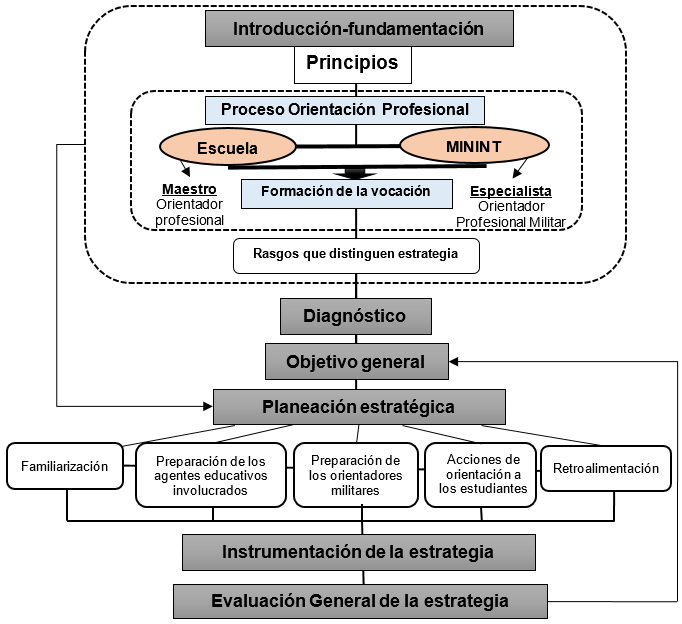
Figure 1. Pedagogical strategy for career guidance towards MININT specialties in Basic Secondary Education students
Introduction-justification
In this stage of the diagnosis, the foundations of the strategy are presented, corresponding to the result of the references and theoretical bases assumed, reconstructed and integrated considering the proposed scientific result, presented through principles, the proposal of a professional orientation process linked to MININT specialties and the qualities that should distinguish the strategy.
Diagnosis
The diagnostic phase serves as the starting point for implementing the actions that comprise the strategy. It employs techniques and instruments that gather information and aims to diagnose the initial state of the career guidance process developed through the MININT collaboration with schools. The diagnostic phase is based on the dimensions and indicators defined as the operationalization of the study variable.
Statement of the general objective
The overall objective is aligned with the diagnostic results. Therefore, the overall objective of the strategy is to improve, through the incorporation of a career guidance process, the development of vocational interest in MININT specialties among students in Basic Secondary Education in the Municipality of Pinar del Río.
Strategic planning
The strategic planning aims to design a system of general actions for the career guidance process related to MININT specialties within Basic Secondary Education. It is proposed that the strategy, from a planning perspective, be structured in five stages: familiarization, training for administrators and teachers, student guidance, non-professional guidance provided by families to their children, and feedback. These stages largely coincide with the phases of the career guidance process during the period of awareness-raising about the military profession.
Instrumentation
Implementation, as a phase of the strategy, aims to implement the actions that allow the implementation of the activities of each stage, as planned in the strategic planning.
Assessment
In this stage, the results of the pedagogical strategy's implementation are evaluated, either throughout the entire process or at a specific point in time. It has several specific objectives, including verifying the level achieved through the actions planned in previous stages, characterizing the final state of career guidance for junior high school students, and redesigning the pedagogical strategy considering the difficulties identified in working with students and teachers.
DISCUSSION
The pedagogical strategy presented took as essential references the work of a group of authors who define it: Addine et al. (2002); De Armas and Valle (2011); and Pérez and La Cruz (2014). The following essential attributes stand out among their postulates:
In the research, the definition of pedagogical strategy offered by De Armas and Valle (2011) was assumed, who conceive it as: (…) the projection of the pedagogical direction that allows the transformation of an educational system, subsystem, institution or level to achieve the proposed goal (p. 38)
Similarly, the strategy structure adopted was presented by De Armas and Valle (2011), who consider it to be composed of the following aspects: introduction and rationale, diagnosis, statement of the general objective, strategic planning, implementation, and evaluation. This designed structure has a pedagogical character because it manifests the categories of Pedagogy, as defined by López (2021), who states that these categories are not static concepts but rather constitute a dynamic system. This author recognizes the following categories: instruction, education, teaching, learning, training, and development.
The Education System has observed that the school must evolve as a social institution embedded in the community, where, based on this connection, the positive contributions the community can make to the formation of new generations are leveraged, as well as the benefits of the school's support for the interests of the community, where the student is embedded as part of it.
Basic Secondary Education serves as a breeding ground for students, through the MININT interest groups, to develop their inclinations and vocations and choose, in their future professional careers, specializations studied at MININT training centers and universities. This allows them to enhance their preparation and continue their studies. The essence of the professional orientation process, as part of shaping an individual's personality and preparing them for conscious decision-making, provides students with the necessary level of satisfaction in a specific professional area. This element is a significant motivation for the author, given the training of new generations with the potential to join MININT.
In analyzing current conceptions of career guidance, it is necessary to focus on the historical-cultural approach, as this is the foundation of the methodological proposal for career guidance work in lower secondary education. Previously, it has been noted that functionalist, psychoanalytic, and humanist conceptions are incapable of fully understanding the complexity of human motivation and its regulatory function in behavior, since this requires recognizing the dialectical unity between the subjective, active nature of the psyche and its historical and social determinants.
Given this opportunity, each educational institution, and particularly the Junior High School, aims to systematically develop career guidance, transforming the school into the most important cultural center. This constitutes a pathway for designing career guidance toward positions and specializations within the MININT. Among the careers that some young people do not choose, those linked to military professions stand out, due to the set of demands, regulations, and requirements that a student, cadet, or officer must meet, whether in the Revolutionary Armed Forces or the MININT. For this reason, choosing a military profession should be a priority to encourage, as it is both a necessity and a guarantee for preserving the revolutionary process and social achievements such as internal order and public safety.
Career guidance toward military careers should be a systematic and intentional process aimed at developing professional self-determination. Improving the career guidance process toward specialties within the MININT from the junior high school level contributes to optimizing and stimulating student recruitment, retention, and graduation as future professionals in military careers. In junior high school, this guidance can be understood as the support students receive through the ongoing educational influence of qualified personnel (guidance counselors), particularly those affiliated with the MININT, acting as a socializing agency and community link, with an impact on the school context through interest groups.
Encouraging students' interest in military careers is an objective to be achieved, where the student acquires knowledge, values and skills associated with preparation for combat specialties, in such a way that they can recognize the social importance of this work and choose it consciously.
For this purpose, Instruction 7 of December 20, 2017, from the First Second Chief of the Political Directorate of the MININT, was established, which establishes a vocational training strategy, based on: Decree No. 63 of the Executive Committee of the Council of Ministers dated March 4, 1980, which establishes the normative documents for vocational training and professional guidance in the National Education System.
Likewise, it is based on compliance with Guideline 121 corresponding to the Update of the Economic and Social Policy of the Party and the Revolution for the period 2016-2021, approved at the Seventh Congress of the Communist Party of Cuba and the National Assembly of People's Power, the Work Objectives 85 and 89 of the First National Conference of the Communist Party of Cuba and as part of the Working Agreements between the Union of Young Communists and the MININT, it takes into account that it is essential to strengthen the integrative work of Vocational Training and patriotic activity with the students of the National Education System, an action that must be promoted and developed by all members of the Institution.
In this case, it is essential to implement a model that brings together these and other specialties, fundamentally related to the confrontation and investigation of crime, such as (Criminal Investigation, Counterintelligence, Technical Investigative Police and all branches of the National Revolutionary Police) directly proportional to the demand of the MININT regarding the need for clarification and reduction of criminal impunity, conditioned by a greater number of forces trained to guarantee order and citizen tranquility, which do not currently occupy the necessary staff to carry out these missions in the province.
The essence of the career guidance process, as part of shaping an individual's personality and preparing them for conscious decision-making, is to provide students with the necessary level of satisfaction in a specific professional field. This element is of interest to the author, given the need to train new generations with the potential to join the MININT.
In analyzing current conceptions of career guidance, it is necessary to focus on the historical-cultural approach, as this is the foundation of the methodological proposal for career guidance work in Basic Secondary Education, linked to specialties within the MININT. Previously, it has been noted that functionalist, psychoanalytic, and humanist conceptions are incapable of fully understanding the complexity of human motivation and its regulatory function in behavior, since this requires recognizing the dialectical unity between the subjective, active nature of the psyche and its historical-social determination.
These regulations allow, according to requests from the Municipal Education Directorate in each territory, the creation of classroom or group projects in schools as part of the complementary activities carried out by secondary schools for career guidance. The authors consider the Group Project to be one of the ways to directly influence the career guidance of students who participate in interest groups in Basic Secondary Education. These proposals align with the MININT `s career guidance process regarding specialties, given its relevance to the topic.
The author believes that prioritizing social interests over individual ones, shedding selfishness, individualism, and personal ambition, correspond to qualities of a superior personality, which can only be consolidated in a gradual process of awareness, both for adults, children, and young people, throughout family life, school life, and in future work.
In the current context, Velázquez and Hernández (2020) state that the new curricular conception of the Third Improvement of the National Education System is characterized by being flexible, comprehensive, contextualized, and participatory, which allows educational institutions to construct their curriculum according to their socio-educational conditions, territorial particularities, and the resources available to the locality. This proposal expresses that students should have conscious and creative participation in the transformation of society.
It is considered that, during the development of interests, knowledge, and skills related to the profession, the junior high school student plays a leading role as an active and reflective participant in their learning. Their gradual self-directed learning, driven by an interest in the situation of their school and community regarding crime prevention and combating illegal activities, combined with the assimilation of the content of the specialty they wish to pursue and an awareness of the discipline and principles of the military profession, allows the student to construct and reconstruct their future with a view to approaching it through practical experience. Establishing the foundations for the development of their self-esteem and self-determination at other levels of education is key to their future fulfillment from a military professional perspective.
Career guidance in junior high school can be understood as the central focus of interpersonal relationships, fostering a system of patriotic, psychological, military, and social influences aimed at cultivating professional interests in specialties within the MININT. For prospective students, this process offers pathways, methods, and procedures for assimilating the foundations of the military profession, while also addressing certain individual and social needs that arise from their area of interest, embedded within the school and community environment.
Rivera Pérez et al. (2018) refers to the process of career guidance toward military careers with a command profile as a pedagogical strategy that influences students at Camilo Cienfuegos Military Schools (EMCC) by changing their attitudes toward the positive and significant aspects of these careers. This influence, also extended from family and community, is an important premise for the pedagogical strategy to fulfill its purpose. The author believes that greater acceptance of the necessary changes and increased support for students, combined with the career guidance provided at the Military School, would allow them to become aware of their potential and the possibilities for personal development.
In turn, Rivera Pérez, et al. (2018) assert that the school and the family form a duo that directly influences the preparation, guidance, and selection of the profession with a command profile, based on a firm, affectionate assessment of the achievements and understanding of the level of personality development for their future profession, which gives the family a leading and conscious role in the student.
These authors present a pedagogical strategy that, in practical terms, makes it possible to guide the career orientation process toward military careers with a command profile. This strategy consists of three stages: defining interests and needs, planning and implementing actions, and evaluation; each with its corresponding objectives and actions. In their research, the authors propose workshops for training teachers, administrators, and families/community members, as well as the military interest circle program, among others. At the EMCC, these actions are regulated and implemented within the educational process through the Comprehensive System of Vocational Activities.
According to López (2021), the Teaching and Learning Process in EMCC is structured in three subsystems, each with its defined premises:
Similarly, the author defines the specific vocational and career guidance activities that should be carried out in military schools, divided into four stages: love for the military, love for the military profession, love for military specialties, and consolidation of career guidance. In accordance with this vision, we concur with the referenced authors and propose, as elements to be developed in extracurricular activities in Basic Secondary Education, advance guidance by MININT specialists for students in interest groups, for their future integration into MININT classrooms, based on the proposal to reinstate their creation in pre-university programs.
The way in which students learn about the missions and their importance should be fostered through proactive interaction that strengthens their emotional connection with the student. Therefore, career guidance in junior high school should be systematic and intentional, delivered in a planned and structured manner, with the aim of stimulating students' motivation and self-determination toward their chosen specializations, prioritizing those involving combat.
Studies conducted by Martínez de Osaba et al. (2020) point to professionalism in career guidance based on professionalization strategies that take into account the figures of professional development, articulated with methodological and investigative advice, which address the development of professional competencies in the cognitive-affective, guidance-persuasive, investigative-technological and managerial-evaluative order.
Miranda et al. (2022) refers in their research to the development of the career guidance process in accordance with local development needs for secondary school students. They state that this process should be combined with the need to foster students' interests, aspirations, motivations, and plans for professions essential to the municipality's development in its economic-productive, socio-political, and educational-cultural dimensions. The contributions of Mila (2022) are particularly important, as she affirms that career guidance is the process of progressively transferring educational actions through the dialectical unity between the personal and non-personal components, enabling students to consciously choose a professional path of further study to which they aspire.
Balmaseda et al. (2023) have considered that professional orientation is based on the active and regulatory role of the individual, in accordance with the development of his personality; the higher motivational formations, such as: ideals, self-esteem and professional intentions, constitute the representation of the personal meaning that the profession acquires for the subject, the professional motive then becomes the guiding axis of the behavior.
One point of interest is that raised by Avalo-Rodríguez et al. (2023) regarding the didactic approach to the Civic Education subject in junior high school, which, among its objectives, aims to contribute to vocational training and career guidance. They state that knowledge of professional content requires developing an affective connection and personal interpretation of the material, within the framework of a dynamic and formative activity where students learn and consolidate their professional skills.
All activities undertaken must involve linking what is said about the profession with its areas of action, contextualized within those professions with the greatest shortages in the region. In this regard, it is considered that the subject of Civic Education can serve as a link between curricular and extracurricular activities, where the MININT officer, together with the teacher, engages in the practical and dynamic expression of the subject's content through demonstrative activities and life stories. These activities will reinforce the affective and cognitive connection with the MININT `s specialties, highlighting their usefulness and social impact, which is very much in line with the shortage of these professions in each region.
Cabrera- González and Ruiz-Gutiérrez (2023) propose that the career guidance process is dynamic and gradual, involving specific activities designed to strengthen students' inclination towards teaching careers and reinforce their values and feelings towards the teaching profession, leading them to a conscious choice. The authors recognize that it should be a process of progressively developing a personality inclined towards teaching careers, fostering the acquisition of knowledge, skills, abilities, and values that enable the emergence of personal and social professional motives and interests. This process utilizes pedagogical, psychological, and sociological resources, based on differentiated and motivational work carried out by the school with the support of the community.
Chaveco (2023) notes that educational guidance within the Cuban military education model has not been sufficiently addressed, as it has only been researched from one of its spheres: the professional one. She further states that the systematization of ethical and professional values constitutes the core of the educational framework for guidance. The author argues that this framework is not limited to the assessments made by military instructors, but also includes their facilitation of personal assessment processes in the military student, which influences their preparation for value-based guidance as a way of concretely embracing their values.
We agree with Chaveco (2023) in arguing that in the evaluative process, the subjectivation of values is essential in the profession, where the military teacher provides guidelines that lead to the enhancement of the processing of ethical-professional experiences in the students, because for these relationships to be assumed as a value, it is necessary that the valued content, socially useful and relevant to the professional training of the military, is expressed in experiences integrated into the personality of the student, that is, in emotions consciously recognized and given meaning by the subjects.
Carpio et al. (2024) emphasize that the integrated system of career guidance actions for vocational training is based on the cooperation and coordination of educational, training, and employment factors (p. 535). These authors state that this integrated system of actions is innovative, given that it provides the Cuban context with a general framework for managing career guidance for vocational training at the municipal level, and relevant because it responds to the current need to align guidance and training processes with the areas of the economy with the highest demand.
Alpañés-Freitag (2025) highlights the importance of linking professions with subjects taught in lower secondary education, as this intuitive way allows teachers to connect their subject matter with professional reality. This involves conveying the practical applications of the subject and its connection to current social, political, or economic issues. Examples of knowledge applied to everyday areas, objects, or uses also help make learning meaningful, provide context for the subject, and motivate students.
Tamayo and Buchaca (2025) argue in their research that the results obtained demonstrate the urgent need to improve career guidance. To achieve this, it is essential to consider the systemic sequence of functions within this process, ensuring knowledge acquisition, skills development, and capacity building. The authors emphasize that only in this way can the success of the process be guaranteed and the progressive transfer of actions between personal and practical components be facilitated, directly impacting career choice and continued studies.
The criteria generally put forward by these authors are shared; however, a proposed concept for career guidance is developed, which is considered helpful in specifying aspects related to this specialty. Semanat et al. (2024) reaffirm in their research a reflective process regarding the implementation of actions that allow the transformation of the educational management of teachers in relation to the family guidance process for vocational training in Basic Secondary Education, noting that the new historical and social conditions that determine the context of development of the students require the creation and enhancement of the leading role played by families and the community as important educational agents in the development of the students' professional interests. This conception justifies the importance of preparing families to work together with the educational institution to achieve common goals.
It is concluded that the professional orientation linked to combat specialties of the MININT is that which the subject receives from a constant educational influence of qualified personnel in the subject (military counselor), supported by specialists from various combat branches, teachers and other members of the community, on a series of essential theoretical and practical elements of these professions, with the assimilation of the contents, aware of the discipline and principles of the military profession, intentionally worked on the basis of the knowledge of these specialties, linked to each other and experienced by the students in workshops and visits to units, in such a way that it allows them, the choice, training and future professional performance in one of these specialties.
REFERENCES
Addine, F., González, A. M., & Recarey, S. C. (2002). Principios para la dirección del proceso pedagógico. En García, G. (Comp.), Compendio de Pedagogía, 80-101. La Habana: Pueblo y Educación.
Alpañés-Freitag, M. (2025). Cómo contribuir desde las asignaturas a la orientación profesional del alumnado en educación secundaria. EA, Escuela Abierta, 28, 43-60. https://doi.org/10.29257/EA28.2025.03
Avalo-Rodríguez, Y. J., Infante-Ricardo, A. I., & Cervantes-Hinojosa, N. (2023). Procedimientos para la formación vocacional y orientación profesional en la Secundaria Básica. Revista Metropolitana De Ciencias Aplicadas, 6(1), 25-31. https://doi.org/10.62452/fncjhz85
Balmaseda, K.; Benítez, M. A., & Becalli, H. E. (2023). La Inteligencia Emocional en la orientación profesional hacia las carreras pedagógicas del área de las Humanidades. Retos, 21(7), 1-15. https://revistaseug.ugr.es/index.php/RETOSXXI/article/view/29149
Cabrera-González, L., & Ruiz-Gutiérrez, A. (2023). La orientación vocacional pedagógica en los educandos del Nivel Educativo Secundaria Básica. Educación Y Sociedad, 21(Especial), 209-228. https://revistas.unica.cu/index.php/edusoc/article/view/5786
Calzadilla, O. (2015). La integración de la Orientación Profesional Pedagógica en la asignatura Didáctica de la Lengua Española de la carrera Licenciatura en Educación Primaria. Voces y Silencios. Revista Latinoamericana de Educación, 8(1), 82-102. http://dx.doi.org/10.18175/VyS8.1.2017.06
Carpio, A., Columbié Díaz, I. R., Suárez, I., & Wolf, S. (2024). La orientación profesional para la formación profesional; imperativo a las transformaciones socioeconómicas en Cuba. Revista Uniandes Episteme, 11(4), 524-538. https://doi.org/10.61154/rue.v11i4.3659
Constitución de la República (2019). https://www.granma.cu/file/pdf/gaceta/Nueva%20Constituci%C3%B3n%20240%20KB-1.pdf
Chaveco, A. (2023). La reflexividad como esencia dinamizadora de la orientación educativa en valores ético-profesionales. Didasc@lia: didáctica y educación, 14(1). 261-281. https://dialnet.unirioja.es/servlet/articulo?codigo=8985670
De Armas, N., & Valle Lima, A. (2011). Resultados científicos en la investigación educativa. La Habana: Pueblo y Educación.
Infante, A.I., Leyva, P. A., & Mendoza, L. L. (2018). La preparación para la elección profesional en la educación preuniversitaria: modelación teórica y metodológica. En Santiesteban, E. (edit.). Ciencia e Innovación Tecnológica, Vol. II, Capítulo Ciencias Pedagógicas, Las Tunas: Académica Universitaria & Opuntia Brava.
López, Y. (2021). La orientación profesional hacia las carreras militares con perfil de mando desde la Biología. Universidad de Holguín, Cuba.
Martínez de Osaba, C. R., Paula A, C. A., & Hernández-Cruz, R. A. (2020). La profesionalidad en la orientación profesional hacia la carrera licenciatura en Educación. Física en la educación preuniversitaria. Mendive, 18(3), 541-558. http://scielo.sld.cu/scielo.php?script=sci_arttext&pid=S1815-76962020000300541&lng=es&tlng=es
Mila, R. (2022). Estrategia pedagógica para la Orientación Profesional de los adolescentes en Secundaria Básica. ROCA, 19(1). http://portal.amelica.org/ameli/journal/440/4403729019
Miranda, C., Reyes, A., & Barrera, I. (2022). Orientación profesional en la educación media y desarrollo local. UNESUM-Ciencias Revista Científica Multidisciplinaria, 6(1), 49-56. https://doi.org/10.47230/unesum-ciencias.v6.n1.2022.620
ONU (2016). Educación 2030. Declaración de Incheon y Marco de Acción para la realización del Objetivo de Desarrollo Sostenible 4. Publicación de las Naciones Unidas.
Pérez, V. C., & La Cruz, A. R. (2014). Estrategias de enseñanza y aprendizaje de la lectura y escritura en educación primaria. Zona Próxima, (21), 1-16. http://www.scielo.org.co/scielo.php?script=sci_arttext&pid=S2145-94442014000200002&lng=en&tlng=es
Rivera Pérez, N., Torres, J., & Cordero, Élida F. (2018). El proceso de orientación profesional hacia las especialidades militares: una estrategia pedagógica. Mendive, 16(1), 51-64. https://mendive.upr.edu.cu/index.php/MendiveUPR/article/view/1265
Rodríguez, L., & Rodríguez, M. (2016). Evaluación de cualidades del pensamiento de estudiantes de Matemática-Física al ingreso a la universidad. Revista Actualidades Investigativas en Educación, 18(2). https://dialnet.unirioja.es/servlet/articulo?codigo=6789625
Semanat, N. C., Martínez, M. G., & Parra D, Y. (2024). La gestión educativa y la orientación familiar para la formación vocacional pedagógica en Secundaria Básica. EduSol, 24(88), 153-163. http://scielo.sld.cu/scielo.php?script=sci_arttext&pid=S1729-80912024000300153&lng=es&tlng=es
Tamayo, Y., & Buchaca, D. (2025). Metodología para la orientación profesional hacia las carreras de ciencias básicas en el preuniversitario. Mendive, 23(1), e3759. https://mendive.upr.edu.cu/index.php/MendiveUPR/article/view/3759
Velázquez, K., & Hernández, L. (2020). La formación vocacional y orientación profesional pedagógica: prioridad en las Escuelas Pedagógicas. LUZ, 19(3), 131-140. https://luz.uho.edu.cu/index.php/luz/article/view/1051
Conflict of interest
Authors declare no conflict of interests.
Authors' contribution
The authors participated in the design and writing of the article, in the search and analysis of the information contained in the consulted bibliography.
