 0009-0005-6659-2779
  1028850135@qq.com
Esther Diviñó González1
0000-0002-0286-465X esthedivigonza@gmail.comYareira Puig Pernas1
0000-0002-0100-3188 yareira.pp@fenhi.uh.cu

Mendive. Journal on Education, October-December 2025; 23(4), e4188
Translated from the original in Spanish
Original article
Oral expression and interaction to promote intercultural communicative competence in Chinese-speaking students of Spanish
Expresión e interacción oral para favorecer la competencia comunicativa intercultural en estudiantes sinohablantes de español
Expressão e interação oral para favorecer a competência comunicativa intercultural em estudantes sino-falantes de español
Rui Wang1 0009-0005-6659-2779 1028850135@qq.com
Esther Diviñó González1 0000-0002-0286-465X esthedivigonza@gmail.com
Yareira Puig Pernas1 0000-0002-0100-3188 yareira.pp@fenhi.uh.cu
1 University of Havana. Havana, Cuba.
Received: 7/03/2025
Accepted: 15/10/2025
ABSTRACT
The primary objective of foreign language learners is the development of their communicative skills. However, at the Beijing New Oriental Suzhou Branch Institute, the importance assigned to oral expression and interaction has been minimized, with preference given to grammar and vocabulary instruction rooted in translation methods. Contrary to this practice, contemporary pedagogical models advocate for learning grounded in communicative principles from a social perspective, thus, this study aims to disseminate the diagnostic results obtained at the aforementioned institution, facilitating a critical analysis of the teaching-learning process for oral expression and interaction in B1-level Spanish as a foreign language classes, while promoting intercultural communicative competence. The materials used were students, teachers, program, and textbook of level B1. A mixed-methodology approach was employed, incorporating case study analysis, which revealed the persistent influence of cultural tradition and the underutilization of communicative approach advantages. The findings highlight the need to explore alternative learning methodologies tailored to the needs and characteristics of contemporary sinophone learners. The discussion emphasizes that instructors must deepen their knowledge and skills in teaching oral expression and interaction, while students should systematize these competencies as part of their learning process, thereby expanding their intercultural communicative proficiency.
Keywords: East Asia; intercultural communication; interpersonal communication; Spanish.
RESUMEN
La finalidad principal del estudiante de lenguas extranjeras es el desarrollo de sus habilidades comunicativas. Sin embargo, la importancia atribuida a la expresión e interacción orales en el Instituto Beijing New Oriental Suzhou Blanch ha sido minimizada, pues se favorecen la gramática y el léxico, basados en la traducción. Contrariamente a esta práctica, los modelos didácticos actuales abogan por un aprendizaje sustentado en principios comunicativos desde una perspectiva social, por lo que el objetivo de este estudio es socializar los resultados del diagnóstico realizado en la mencionada institución, a fin de que se realice un análisis crítico del proceso de enseñanza-aprendizaje de la expresión e interacción orales en la clase de español como lengua extranjera del nivel B1, y se favorezca la competencia comunicativa intercultural. Los materiales utilizados fueron estudiantes, profesores, Programa, y libro de texto del nivel B1. Se empleó la metodología mixta, y como parte de esta, el método de estudio de caso, el cual demostró, que la tradición cultural sigue presente, y que todavía no se aprovechan las ventajas del enfoque comunicativo. Los resultados señalaron la necesidad de explorar otras metodologías de aprendizaje, que se adecuen a las necesidades, y características de los estudiantes sinohablantes de esta época. La discusión subraya la necesidad de que los profesores profundicen sus conocimientos y habilidades para enseñar la expresión e interacción orales, y los estudiantes las sistematicen, como parte de su aprendizaje, para de esta forma, ampliar su competencia comunicativa intercultural.
Palabras clave: Asia oriental; comunicación intercultural; comunicación interpersonal; español.
RESUMO
O principal objetivo dos estudantes de línguas estrangeiras é o desenvolvimento de suas habilidades comunicativas. No entanto, no Instituto Beijing New Oriental Suzhou Blanch, a expressão e interação oral têm sido minimizadas, dando prioridade à gramática e ao léxico, com base na tradução. Em oposição a essa prática, os modelos didáticos atuais defendem uma aprendizagem sustentada em princípios comunicativos sob uma perspectiva social. Assim, o objetivo deste estudo é socializar os resultados do diagnóstico realizado na referida instituição, a fim de promover uma análise crítica do processo de ensino-aprendizagem da expressão e interação oral na aula de espanhol como língua estrangeira no nível B1, favorecendo a competência comunicativa intercultural. Os materiais utilizados foram estudantes, professores, programa e livro didático do nível B1. Utilizou-se uma metodologia mista, incluindo o método de estudo de caso, que demonstrou que a tradição cultural ainda está presente e que as vantagens do enfoque comunicativo ainda não são plenamente aproveitadas. Os resultados indicaram a necessidade de explorar outras metodologias de aprendizagem que se adequem às necessidades e características dos estudantes sino-falantes da atualidade. A discussão destaca a necessidade de que os professores aprofundem seus conhecimentos e habilidades para ensinar expressão e interação oral, e que os estudantes sistematizem essas competências como parte de seu processo de aprendizagem, ampliando assim sua competência comunicativa intercultural.
Palavras-chave: Ásia Oriental; comunicação intercultural; comunicação interpessoal; espanhol.
INTRODUCTION
For decades, the process of teaching foreign languages focused on practices that privileged written language as the main means of accessing knowledge and culture, especially through literature, which was then considered a model of linguistic excellence. This orientation led to methodologies based on vocabulary memorization, grammatical analysis, and the translation of isolated phrases, where the student's native language functioned as the predominant vehicle in the classroom, relegating oral skills to a secondary role (Cerezo et al., 2019).
In contrast to this traditional approach, various theoretical currents began to highlight the importance of verbal interaction as a key element for achieving meaningful learning, recognizing its active role in knowledge construction and the development of communicative competence (Leontiev, 1981). In interpersonal communication activities, the language user alternates between speaking and listening with one or more interlocutors, which together allows for conversation through the negotiation of meaning (Navarro, 2021).
According to Batlle and Mañas (2021), this fact may be conditioned by insufficient exposure to the language that they learn, and because of the limited opportunities to put the content into practice. received, since they study in a non-Spanish-speaking context (p. 14). Furthermore, studying in a country where Spanish is not an official language and therefore the student does not need it in their daily life, implies that the degree of Motivation and the meaningfulness of their learning are different from those of those who they are in language immersion in a Spanish-speaking country.
It has been demonstrated that the best way to learn a language is through immersion, but the problem is that The question that arises in this situation is how to ensure that students of Spanish as a foreign language (ELE) in the context of Those who do not immerse themselves in this skill develop it efficiently.
It should be considered that:
Oral expression, in its dialogic form (oral interaction), is the natural form of spoken language, the one that most accurately reveals its nature, and must be considered in the teaching -learning process of foreign languages according to the communication needs of the students and the communicative situations to which they may be exposed. (Rodríguez et al., 2023, p. 3).
Teaching oral expression and interaction (EIO) in the teaching of ELE at the Beijing New Oriental Suzhou Blanch Institute (IBNOSB) becomes complicated because Contacts and opportunities to interact in the language they are learning are scarce. Since the classroom is the only (or almost the only) place where the student puts their knowledge into practice in a non-immersion context, the class must be the suitable space that allows for the optimal use of the foreign language through activities in which they can develop their communication skills.
Intercultural communicative competence (ICC) understood as the ability to interact indeed with people from different cultures, and that involves not only mastery of language, but also the understanding of cultural norms, values and contexts (Herrera & Pérez, 2021, p. 11), is closely related to the EIO because the former requires a attentive listening to grasp not only the verbal content, but also the cultural context underlying, which helps to avoid misunderstandings, fosters empathy towards others cultures and build stronger, more respectful relationships during communication interpersonal.
Both EIO and CCI are intrinsically connected. One leads to the improvement of the other, facilitating more effective and enriching communication between People from diverse cultures. Practicing and reflecting on these skills are essential for achieving successful communication.
The teaching of Spanish in China is currently experiencing a boom: departments have been opened in language institutes and Spanish departments in hundreds of universities. Accompanied by its expansion and more frequent exchange among teachers of Spanish as a Foreign Language, there is also concern and reflection on how to teach students Chinese speakers. In the study of this area, there has been no shortage of efforts, both on the part of Chinese teachers, as well as foreign teachers who go there to teach. Without However, at IBNOSB, the Spanish class continues to develop with the methods traditional, who do not always attach importance to the above reflections.
Hernández et al. (2021) coherently analyze that the communicative approach has broken the systematicity of the content based on the grammatical rules of the model traditional, but this makes it difficult to assimilate grammatical knowledge of the language. This is because grammatical presentations based on this approach are embedded in different communicative situations, which are difficult for Chinese students to process, affecting their learning outcomes and consequently their motivation.
On the other hand, the communicative approach argues that foreign languages are acquired using them in different communicative situations, which still represents a process lengthy assimilation process for both teachers and students, due to the long tradition of the grammatical method in the teaching of Spanish as a Foreign Language, based on numerous structural exercises, such as filling in the blanks, a gap remains in the study of the didactic theory of the communicative approach; therefore, its suitability should be combined with more closely related methods. to the current Chinese reality.
The teaching of Spanish as a Foreign Language (ELE) in the Asian giant is closely linked to the country's social, cultural, and political environment. According to research conducted by Hernández et al. (2021), the reason many students study Spanish at university is not due to their own vocation, but to the obligation or recommendation of the family, considering it a good option in their future job search.
Furthermore, socioeconomic, political, and cultural factors greatly influence employment. Related to Spanish: the offers are mostly based on the growing economic exchange with Latin American countries, that is, many learn Spanish to use it as a working language in foreign trade companies. This type of employment is characterized by abundant Chinese-Spanish and vice versa translations and interpretations, which the communicative approach has not taken into consideration from a theoretical or pragmatic point of view.
It is also important to note that the IBNOSB exam assessing Spanish proficiency is based on knowledge of grammar rules, vocabulary, and translation, and therefore does not assess students' communicative competence. Given the current state of Spanish language teaching, this research, aimed at developing the EIO (Educational Intervention), conducted a diagnostic assessment at the IBNOSB B1 level. The center is a private educational service provider.
It is currently the largest comprehensive language school in China, judging by its program offerings and the total number of enrolled students from across the country. The services include Spanish as a Foreign Language (ELE) courses, as well as courses in English, Japanese, Korean, French, German, and Italian. Classes can be taken in person or online; study abroad consulting services are also offered.
The Spanish as a Foreign Language (ELE) course is taught for 6 hours per week. It has a total of 160 hours. class hours throughout the semester. In order to share the results of the diagnostic assessment carried out at the aforementioned institution, on the EIO in the B1 level Spanish as a foreign language class, to promote Intercultural communicative competence is assessed through a diagnostic study using a mixed methodology and the method of case study.
MATERIALS AND METHODS
The materials used to carry out the diagnostic study are related to Level B1 of the IBNOSB Short Course: its students, teachers, as well as the Program, and the textbook they use in the ELE classes.
Description of the methodology used
The mixed methodology was applied, which represents a set of systematic processes, empirical and critical approaches that involve the collection and analysis of qualitative data and quantitative data, as well as their integration, to achieve a broader perspective and in-depth analysis of the phenomenon. There was a predominance of qualitative methods, as part of these Case study and content analysis were applied.
The case study method constituted an inquiry strategy, which involved the in-depth research into the development of EIO in its real-world context, and was based on several sources, such as the review of the documents that govern the teaching-learning process at the B1 level (Program of the subject and book Modern Spanish 2), interviews with all teachers, surveys to All students were observed, and 10 classes were monitored. The reality was studied within its context. The phenomenon was explored in depth, as it naturally occurs.
Content analysis was performed to analyze the arguments expressed in the surveys, and in interviews, in order to seek new solutions as part of the process investigative. For the quantitative methodology, mathematical analysis was used, based on the study statistical analysis, and as part of this, percentage analysis was used to evaluate the results of the interviews and surveys, demonstrate the usefulness of these instruments, and look for new solutions.
Population and sample: their characterization
The student population at level B1 consists of 45 university students, They come from all over the country. 28 females and 17 males. Their ages range from 18 to 20 years old. Upon completing their C1 level studies, they aspire to work in Latin America or China, and put their Spanish language skills into practice, primarily in the economic sector.
The Spanish Language department has a staff of 10 teachers, all from Chinese nationality, graduates with Bachelor's degrees in various specialties, namely: 4 are Bachelor's degree in Spanish language, 2 Bachelor's degrees in Translation and Intercultural Mediation, 1 Bachelor's degree in Spanish Literature, 1 Bachelor's Degree in Social Sciences, 1 Bachelor's Degree in Management and Research of Business communication, and 1 Bachelor's degree in business. Their ages range from 26 to 34 years. Of the total, 50% have between five and ten years of experience in teaching Spanish as a Foreign Language (ELE), and the other 50% have less. with five years of experience. We worked with the entirety of both populations.
RESULTS
From the analysis of the Program
The B1 level program guides and directs the PEA at IBNOSB. The first thing to note is which does not state when it has been in effect. In his presentation he refers to the following aspects:
Course name: Spanish Intermediate Level I
Nature of the course: Mandatory course for the specialization
Evaluation method: Exam
Total hours: 160
Prerequisite courses: level A2
Applicable specialty: Spanish Language
The program highlights that the course follows a hybrid teaching model, combining resources from the Chaoxing learning platform; however, it doesn't clarify the specific approach. It comprises 15 teaching units using the textbook "Modern Spanish 2." It also explains that, during the semester, students will first need to master vocabulary and grammar, and secondly, develop the ability to express themselves, communicate, and interact, using the knowledge they have acquired, as well as understanding the culture of Spanish-speaking countries.
Analysis of the objectives
The objectives are divided into two fundamental categories: course objectives, which they are subdivided into three levels: Knowledge, Skills, and Qualities, and vocational training objectives that are subdivided into Training Specifications Professional, Skills Training Specifications and Specifications Personality. Unit objectives are not specified.
In general, the Knowledge objectives overestimate the content grammatical and lexical differences, and subordinate cultural differences, confining them to the differences Fundamental cultural differences between China and Spain. The objectives of the Skills Level neglect communication skills. (Understanding, expression, interaction and mediation, as well as) such as cultural skills, like understanding and respecting the cultures of different countries Spanish speakers, which would allow students to interact effectively, and gain confidence in using the Spanish language.
The objectives of the Qualities Level emphasize the importance of fostering values of the Chinese culture in general, such as work ethic, responsibility, honesty, the self-directed learning, studying, etc., but it also refers to the importance of work collaborative, an aspect that is considered plausible. The training specifications regarding skills refer to the importance from "mastering knowledge related to intercultural communication" to understanding the basic characteristics and differences between Chinese culture and that of the Spanish-speaking countries; but they do not delve into the importance of acquiring ICC.
It should also be noted that these specifications reinforce the idea of the study of Spanish for use in jobs related to business management. The clear reference to the need to develop strong communication skills is also acknowledged. intercultural, demonstrating an open attitude towards diverse cultural phenomena, and the ability to communicate with good results, effectively at a multicultural level.
Furthermore, the importance of possessing skills in the application of technologies is highlighted. of the information, so that tools and Modern methods, such as artificial intelligence, are considered positive. Program Specification, as it takes into consideration the level of development technological development in Chinese society, and that this may be one of the methods through which can foster interpersonal communication, and the rest of the skills.
Analysis of teaching content
The contents of the Program are distributed in 15 units, in which they require: the title, the communicative functions (CF), the vocabulary, the grammar, and the sociocultural theme taught in each of them. In relation to the CF it is observed that They only work on describing, refuting arguments, narrating, and expressing opinions; both The latter are repeated in almost all units, but the following are excluded: to argue, to present reasons, to request and offer information, to make requests, to talk about tastes and preferences, among other things; nor do they take into consideration the different exponents of each function.
Sociocultural content leaves aside topics that are so important for a B1 level Spanish as a Foreign Language student, including customs and traditions, daily life (family structure, social roles), geography and cultural diversity, the media, values of Spanish-speaking countries, social problems and environmental factors, which could promote oral EIO and the intercultural communicative competence so necessary in the present.
Teaching methods
The Program states verbatim: combination of lectures, discussions and after-class exercises. Classroom instruction focuses on the student as protagonist. The fact that the method of discussion is declared is valid, because It contributes to the development of communicative competence in general and EIO in particular. The only organizational form of the teaching process that is oriented is the I work in groups, both inside and outside of class.
After a detailed analysis of the Program, it can be stated that EIO and the development of the CCI have little space, as priority is given to the objectives are vocabulary analysis, grammar, and text translation; it does not They do not expand the communicative functions nor the exponents that correspond to level B1; Sociocultural knowledge is not being utilized. Furthermore, the variety of methods and forms of class organization are not used (work in pairs, debates, round tables, panels, role-playing, etc.) that facilitate EIO. Furthermore, the objectives of the assessments do not include oral communication skills.
From the analysis of the textbook
Español Moderno 2 is the textbook intended for B1 level ELE courses of all the country's Spanish language faculties and institutes. It was published in 2015. The content is distributed across 16 units. The book acknowledges that, compared to the old text, the new material presents significant differences in its content, mainly in the following: aspects:
Later, some "basic principles" are outlined that teachers are expected to carefully observe in order to achieve greater teaching effectiveness. These are They take verbatim from the book:
These clarifications indicate that more importance is given to vocabulary learning and the grammar of each lesson that relates to the communicative use of language; that the method of repetition plays a very important role, which teachers do not have the freedom to expand upon the content proposed here; that the active participation of students in the class depends on these guaranteeing, beforehand, the memorization of the text in question study; that they master the key points of grammar and vocabulary, and perform the minus one exercise from the lesson that will be taught.
While the guidelines for working with the book indicate that students should master the verb conjugations of the unit and apply the grammar learned in monologues and dialogues, the reality is that of the 192 exercises contained in the textbook for to practice what they have learned, only 21 are dedicated to oral expression (in all cases, they must answer questions related to the text, or summarize it, based on a recording); In the 160 hours of classes that the semester has, interaction with the teacher, nor among the students, a skill that must be developed in a Spanish as a Foreign Language (ELE) class, even though there are conversation and listening classes, because all possible spaces They should be used to promote communication.
When analyzing the functional contents, it is observed that the function "narrate events of "past" is repeated in 8 units. Communicative functions are not used to expand the knowledge and communicative competence of the students, through dialogues, debates, or other forms of work cooperative.
The sociocultural content, which is presented at the end of each unit, is not emphasized. They are only presented for students to do extracurricular reading, for their personal knowledge. However, its treatment in a foreign language class could contribute to the EIO and help to promote intercultural communicative competence, through different activities that respond to the tastes and interests of the students such as: Group projects, use Multimedia resources (documentaries, films, etc.), interactive platforms, interviews and podcasts, discussion forums, role-playing, debates and/or roundtables, reading and analysis of literary texts, among others.
From the survey analysis
A survey was administered to all students with the aim of finding out their opinion about the need to develop EIO; whether or not this skill is practiced in classes; if they of interest and how the cultural component is addressed, as well as the materials they use for this; finally, the importance they place on development of intercultural communicative competence. The procedures followed were in accordance with the ethical standards of editorial committee, as the impartiality of the researchers and the student anonymity.
Graphs 1 and 2 show, in percentages, the quantitative results projected by the survey of students, based on two scales: one from 1 to 5 (which considers positive answers 3, 4 and 5) and the other from 1 to 10 (which considers answers 7, 8, 9, 10 to be positive).
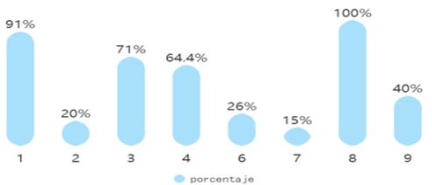
Graph 1. Analysis of oral interaction in class
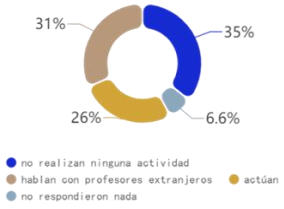
Graph 2. Oral expression activities in the classroom
The qualitative analysis of the survey reveals that students observe the importance They want to interact with their classmates and the teacher during class; however, they also say that this interaction happens infrequently. Most of them want Learn about the culture of Spanish-speaking countries through people who speak Spanish, although they identify the fact of having expanded their knowledge, because of the textbook readings.
They state that the most discussed topics in the sociocultural component are the gastronomy, festivals, and social interactions. They feel they do not participate in activities oral activities after reading comprehension, but the viewing of videos, films and reading other texts. In general, students consider the need to They do interact, but they say they do it only rarely. They state that sociocultural aspects of Chinese culture are studied during the classes, And they do it frequently, which is a positive step towards knowledge. cultural aspects of Spanish-speaking countries; however, the latter is overlooked.
From the interview analysis
Each teacher at the B1 level was interviewed in order to analyze 1. their level of knowledge about the theoretical and methodological conceptions related to EIO 1. intercultural communicative competence; 2. the communicative skills they work on in their classes; 3. the time they 4. the time they dedicate to the development of the EIO; 5. the frequency with which they do so; 6. the materials that They use as support to treat these skills; 6. the skills that They work more often during class; 7 and 8. the way to integrate the skills during classes; 9. the cultural differences that exist among their students; 10. their assessments regarding the importance of developing intercultural communicative competence; finally, 11. if it is used any strategy to develop this skill.
Here, the results projected by the interview are shown in percentages. teachers, based on two scales: one from 1 to 5 (which considers positive the answers 3, 4 and 5) and the other from 1 to 10 (which considers answers 7, 8, 9, and 10 to be positive). 10). Graphs 3 and 4 show the quantitative results of the interview with the teachers.
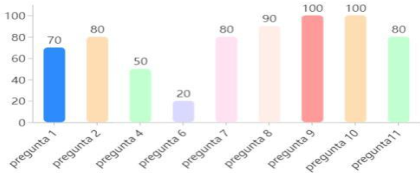
Graph 3. Expression and interaction activities oral
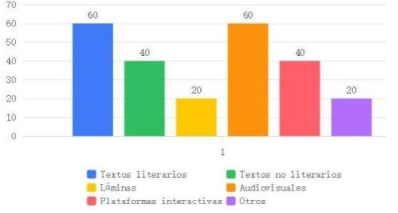
Graph 4. Systematicity of oral expression and interaction activities
The interpretation of the data leads to qualitative analysis which is expressed as continuation:
From the analysis of classroom observations
Each teacher was visited to verify the information obtained in the interviews and gain knowledge of the situation in which the EIO finds itself, as well as intercultural communicative competence. To this end, an observation guide was developed that includes the following aspects: the objectives of the class and the skills that are intended to be developed; the communication skills they develop and which one(s) prevail; mastery of content provided by the teacher; the protagonism and interaction among students; the climate in which the class takes place; if activities are planned that contribute to the development of intercultural communicative competence; and those carried out to contribute to the student's development as an intercultural speaker.
By generalizing from the visited classes, certain aspects could be observed; positive aspects, and the difficulties outlined below.
Main positive aspects
Main difficulties
In general, it is observed that due importance is not given to EIO, nor to intercultural communicative competence.
DISCUSSION
The research showed that the treatment of IBD, as well as The ICC is quite limited; a methodology for this is not yet followed in the classes. to channel them, which is why students express dissatisfaction in their own development, and in the attention to these skills.
Both the review and analysis of the documents that govern the B1 level of the IBNOSB (Program and textbook), as the applied instruments demonstrate a clear Contradiction between the way EIO is taught and the state of the art, due to the methodology used, although some research is already known in China, such as that of Gong and Holliday (2019), which bases its approach on oral interaction for learning a foreign language in Chinese classrooms; here they analyze how Confucian cultural patterns (respect for authority, avoidance of conflict) influence the low oral participation of students, and propose different dynamics of participation.
For his part, Liu (2020), when referring to communicative anxiety, reflects on oral interaction skills and affective factors involved when it comes to Chinese university students; for this purpose, he investigates how anxiety affects oral participation, and therefore proposes strategies to foster confidence (p. 89).
Similarly, Wang (2021) examines how to integrate intercultural communicative competence into language teaching and promotes methodological alternatives that foster intercultural interaction. However, at IBNOSB, the lack of a didactic approach oriented toward dialogue as a facilitator of understanding the voices and values of others has led to the centralization of reasoning schemes that are not very dynamic and that do not consider the replicative nature of language or intercultural communicative competence.
The significant differences between Chinese and Spanish, which are obvious on all linguistic levels, also play a role. Research on language learning demonstrates that applying an appropriate methodology requires starting from the differences between the source and target languages, the degree of which varies between them. This is referred to as linguistic distance, a measure of the typological difference between languages; that is, the degree of structural, lexical, phonetic, etc., similarity or divergence that exists between them (Martín Peris et al., 2008).
The study revealed that finding new learning methods is not only imperative but also a necessity if students' communicative skills are to be fostered. It is essential to consciously and systematically incorporate the treatment of intercultural communication (ICC) into the Spanish as a Foreign Language (ELE) learning process at the Beijing New Oriental Institute. To this end, teachers must be aware of the potential interferences of students' native languages in relation to the language they are learning and leverage this knowledge to refine the learning process.
The use of language immersion as a learning method in Chinese Spanish as a Foreign Language (ELE) classrooms can be an effective way for this student to expand their intercultural communicative competence. It is important to acknowledge that the sample size was limited and that further studies are needed to confirm these results in larger populations. Future work could explore the effectiveness of this diagnostic approach in different contexts, thereby leading to more generalizable conclusions.
REFERENCES
Batlle, J., & Mañas, I. (2021). La interacción entre profesor y alumnos en el aula de ELE: preferencias de uso en función de la experiencia y el contexto de enseñanza. MarcoELE: Revista de Didáctica Español Lengua Extranjera. 33. https://marcoele.com/interaccion-entre-profesor-y-alumnos
Cerezo, E., Guitart, M. P., & Korecki, A. I. (2019). La expresión e interacción orales en la enseñanza de E/le en Noruega. Revista Nebrija de Lingüística Aplicada a la Enseñanza de Lenguas. 13(26), 72-97. https://doi.org/10.26378/rnlael1326302
Gong, Y., & Holliday, A. (2019). Chinese Students' Oral Participation in ELT Classrooms: A Cultural Perspective. Journal of Multilingual and Multicultural Development. https://doi.org/10.1080/01434632.2018.1543695
Hernández, D., Xiaoxu, L., & Santamaría, C. L. (2021). El enfoque comunicativo y su aplicación en la enseñanza del español como lengua extranjera en China. Varona, (72). http://scielo.sld.cu/scielo.php?script=sci_arttext&pid=S1992-82382021000100006
Herrera, D. M., & Pérez, C. M. (2021). ¿Cómo fomentar la competencia comunicativa intercultural desde el enfoque por tareas? Revista Pro-Posições Campinas, SP. 32(1), e20180069ES. http://dx.doi.org/10.1590/1980-6248-2018-0069ES
Leontiev, A. N. (1981). Psychology and the language learning process. Oxford: Pergamon Press. https://unesdoc.unesco.org/ark:/48223/pf0000051411
Liu, M. (2020). Understanding Chinese EFL Students' Willingness to Communicate in English: The Role of Motivation and Anxiety. System, 89. https://doi.org/10.1016/j.system.2020.102207
Navarro, P. (2021). Propuesta didáctica de interacción oral para estudiantes de ELE de nivel A1 en un entorno de enseñanza a distancia digital. Revista Foro de Profesores de E/LE, (17). https://turia.uv.es//index.php/foroele/article/view/21320
Martín Peris, E., Pueyo, S., Vañó, A., Atienza, E., Castro, D., Figueroa, M. I. & López, C. (2008). Diccionario de términos clave de ELE, Instituto Cervantes, SGEL. https://cvc.cervantes.es/Enseñanza/biblioteca_ele/diccio_ele/default.htm
Rodríguez, M., López, M., & Cáceres, D. R. (2023). Tic y desarrollo de la interacción oral en L2. Una experiencia en la FENHI. Revista Órbita Científica. 29(124). https://revistas.ucpejv.edu.cu/index.php/rOrb/article/view/2196
Wang, Q. (2021). Intercultural Communication in Chinese EFL Classrooms: Teachers' Perceptions and Practices. Language Teaching Research. Revista Language Teaching Research. https://doi.org/10.1177/13621688211008944
Conflict of interest
Authors declare no conflict of interests.
Authors' contribution
The authors participated in the design and writing of the article, in the search and analysis of the information contained in the consulted bibliography.
